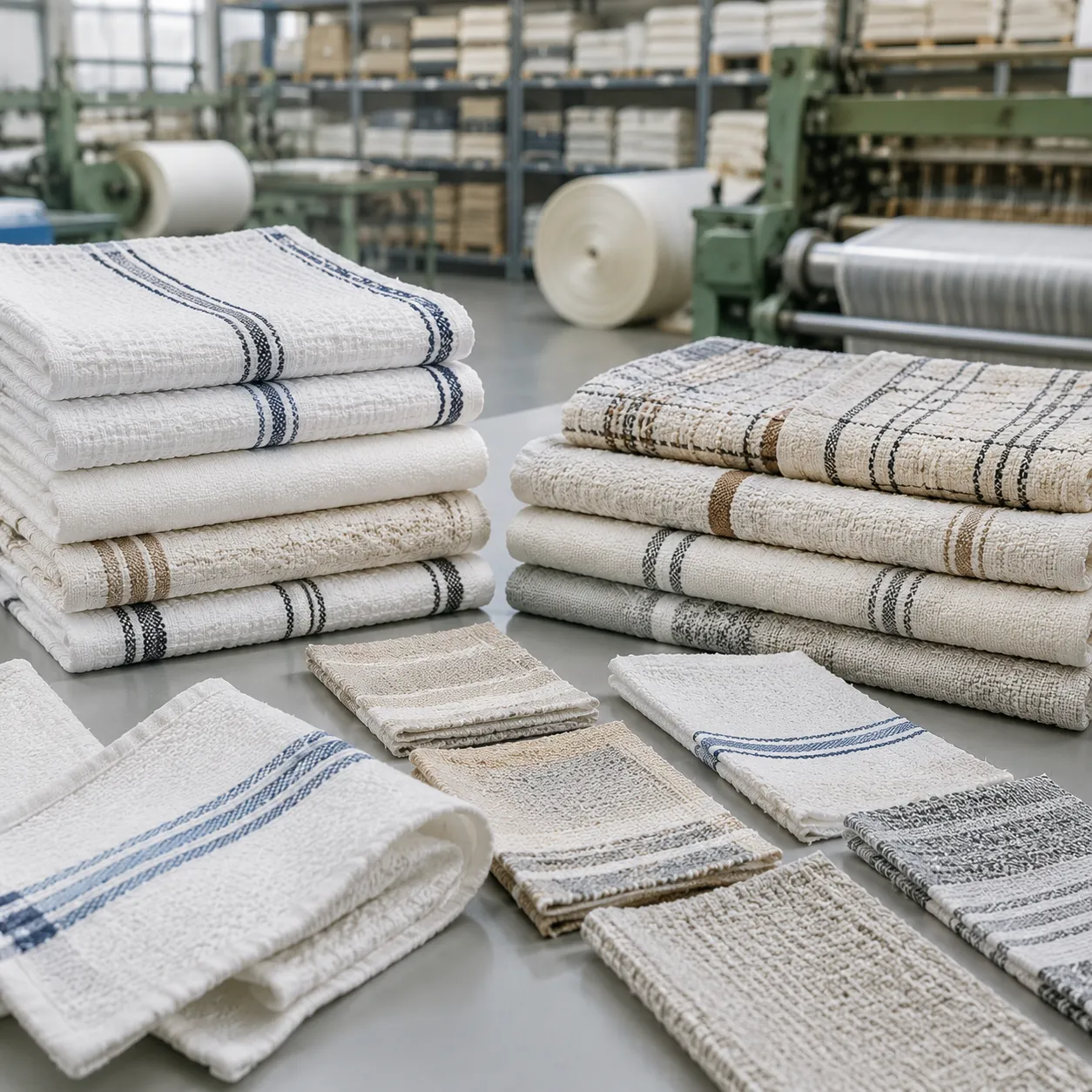
Start with the inspection plan, not the artwork
For this product, we set the QC framework before bulk cutting. Most problems on printed microfiber pieces do not come from the final print file alone. They come from a chain of small misses: fabric skew, unstable heat setting, under-cured print chemistry, uneven shearing, or loose carton moisture control. If the inspector only checks whether the logo is centered, the real risk stays hidden until laundry or first sun exposure.
Our standard outgoing inspection basis is ISO 2859-1 single sampling, normal inspection, General Inspection Level II. Unless the buyer gives stricter brand rules, we apply AQL 2.5 for major defects and AQL 4.0 for minor defects. Critical defects are AQL 0.0 and any one critical finding fails the lot. For consumer beach use, this is the minimum level we recommend; looser standards can save a few hours at shipment, but they do not save claims cost.
| Control item | Standard we use | Pass rule |
|---|---|---|
| Sampling standard | ISO 2859-1 | Single sampling, normal, GII |
| Critical defects | AQL 0.0 | 0 accepted |
| Major defects | AQL 2.5 | Per code letter acceptance number |
| Minor defects | AQL 4.0 | Per code letter acceptance number |
| Defect grading | 4-point internal defect list mapped to AQL classes | Lot pass/fail by accepted count |
What counts as critical, major, and minor on this item
Microfiber beach towels behave differently from cotton terry. The face side is usually printed velour or suede microfiber, while the back may be looped microfiber or short pile. That means some defects are appearance-heavy, while others only show up after rubbing, laundering, or when the towel is stretched on a lounger. We use a product-specific defect matrix rather than a generic home-textile list.
- Critical: broken needle fragment found by detector, mold contamination, oil stain over 25 mm on contact area, wrong fiber content versus claim, banned azo dyestuff or chemical non-compliance, carton label mismatch causing wrong retail SKU dispatch
- Major: visible print ghosting over 8 mm, panel-to-panel color variation above grade 4 under D65 light box, size out of tolerance beyond agreed limit, seam opening over 10 mm, bowing or skew above tolerance, wash shrinkage beyond approved limit, edge curling causing unstable fold or chair placement
- Minor: loose thread ends over 30 mm, slight corner mismatch within sewing tolerance, light press mark removable after first wash, occasional small lint inclusion not visible at 1 meter
If the buyer wants a numerical scoring layer before AQL review, we can run an internal defect point system where critical = 10 points, major = 3 points, minor = 1 point. We then hold the lot for review if the sample average exceeds 5 points per inspected unit or if any single towel carries more than 6 points. This is not a replacement for AQL; it is a faster way to see whether defects are concentrated around one machine, one print batch, or one sewing line.
Sampling code and carton pull: the numbers buyers should ask for
A lot size without the sampling code is not enough. Buyers should ask the mill or third-party inspector to state the exact code letter and sample count used. That prevents loose interpretation on shipment day.
| Lot size | ISO 2859-1 code letter at GII | Sample size | Typical carton pull |
|---|---|---|---|
| 501-1,200 pcs | J | 80 pcs | 10-14 cartons across top, middle, bottom stack |
| 1,201-3,200 pcs | K | 125 pcs | 16-20 cartons from at least 4 pallet positions |
| 3,201-10,000 pcs | L | 200 pcs | 24-30 cartons spread by production date |
| 10,001-35,000 pcs | M | 315 pcs | 32-40 cartons including earliest and latest packed lots |
For example, on a 6,400-piece order of 80 x 160 cm sublimated beach towels packed 30 pcs per export carton, we would inspect 200 pcs under code letter L. We do not allow the factory to present only top-layer cartons. The pull must cover different print runs, sewing shifts, and pallet positions because print shade drift often tracks to one heat-transfer batch rather than the whole lot.
The three failure modes we see most on printed microfiber beach towels
These towels usually fail in three places. The first is the print face, where under-penetration or over-tension leaves pale streaks along fold memory lines. The second is shape stability, where heat setting and cutting grain are not aligned, so the towel twists after wash. The third is edge construction, where overfeed on hemming makes the border ripple even though the body panel measures correctly.
- White grin lines after wash: common on dark full-bleed art when knit base is over-stretched during transfer. Check by cross-stretching the face side 10% by hand; if pale substrate lines appear from 1 meter, classify as major.
- Bowing and skew: especially visible on stripe or geometric layouts. Measure against the longest side after conditioning. We normally hold skew to ≤3% and bow to ≤2.5% for full-print beach formats.
- Edge waviness: often caused by hemming tension mismatch between body and fold. Place the towel flat without pulling. If hem ripple exceeds 12 mm peak-to-valley over 1 meter, it is major because the item will not stack or display well.
Those are not abstract lab issues. They tie directly to process steps. White grin lines usually mean transfer pressure or dwell was not stable. Bow and skew point back to knitting tension and post-heat-setting. Wavy edges come from sewing feed differential or from cutting panels before fabric fully relaxes after printing.
Defined tests we use instead of vague performance checks
Words like "quick dry" or "sand release" are too loose for a QC release. For outgoing control, we prefer methods with repeatable conditions. If the buyer wants beach-use functional checks, we add them as supplementary tests with clear thresholds.
| Property | Method | Threshold we commonly approve |
|---|---|---|
| Fiber content | ISO 1833 or supplier yarn declaration backed by lab report | Within stated composition tolerance |
| Mass per unit area | ASTM D3776 / ISO 3801 | Within ±5% of approved GSM |
| Dimensions after wash | AATCC 135, warm wash and tumble dry per care label | Shrinkage warp/weft within agreed limit, often ≤4% |
| Colorfastness to washing | AATCC 61 2A or ISO 105-C06 | Color change grade ≥4; staining ≥3-4 |
| Colorfastness to rubbing | AATCC 8 or ISO 105-X12 | Dry crocking ≥4; wet crocking ≥3 |
| Colorfastness to light | ISO 105-B02, xenon arc | Blue wool grade ≥4 for seasonal resort programs |
| Water absorbency time | AATCC 79 | Face or back wetting time as approved sample benchmark |
| Bursting strength for knit base | ASTM D3786 | Meet agreed minimum by construction |
For supplementary beach-use validation, we define the procedure up front. One example is a particulate release check rather than a loose "sand test." We place 250 g of dry silica sand, 0.2-0.5 mm grain, on the printed face, apply a 2.0 kg flat plate for 30 seconds, then shake the towel vertically 10 cycles at 30 cm amplitude. Residual sand should be under 8 g for brushed suede microfiber and under 14 g for loop-back constructions. If a buyer has a different use case, we change the medium and threshold, but we always state it numerically.
Another useful add-on is a chair-slip check for lounger programs. We place the folded towel over a PVC recliner panel at 15° incline, then load the center with 4 kg for 60 seconds. Movement greater than 60 mm is usually unacceptable for pool deck use, though it may be fine for retail beach towels. That is why the approved test must follow the channel, not a generic assumption.
Spec tolerances that prevent arguments at final inspection
The easiest claims to avoid are the ones written into the tech pack before sampling. For microfiber formats, the tolerances need to be tighter on print registration and a little more realistic on weight than many buyers expect. A ±2% GSM promise sounds nice, but on a brushed knitted substrate after printing and shearing, it is not stable enough for bulk acceptance.
| Spec line | Typical approval range | Notes |
|---|---|---|
| Finished size | ±2 cm under 100 cm side; ±3 cm over 100 cm side | Measure after conditioning and before aggressive pulling |
| GSM | ±5% | Use conditioned sample, not just in-line cut swatch |
| Print placement | ±5 mm for small logos; ±10 mm for all-over designs | Measured from approved artwork datum points |
| Hem width | 10-15 mm typical with ±2 mm tolerance | Too narrow risks roll; too wide hardens edge handfeel |
| Skew / bow | Skew ≤3%; bow ≤2.5% | Use patterned towel or marked measuring line |
| Shade variation | Grey scale grade 4 within lot under D65 | Panel-to-panel and carton-to-carton |
We also recommend stating whether the towel is measured and weighed before wash only or before and after one care-label wash. On seasonal promo orders, some buyers only approve pre-wash dimensions and then dispute normal relaxation later. On a microfiber program, that is avoidable with one extra line in the spec sheet.
Bulk pricing and why stricter QC changes the cost by cents, not dollars
Inspection depth is not the main cost driver on this item. Construction, print coverage, and packing format move the FOB number more. For a standard printed microfiber beach towel, adding stronger QC discipline usually changes total cost far less than a reprint or claim allowance would.
| Spec example | 3,000 pcs FOB China | 10,000 pcs FOB China |
|---|---|---|
| 75 x 150 cm, 250 GSM suede microfiber, single-side sublimation, polybag | USD 2.18-2.54 | USD 1.91-2.22 |
| 80 x 160 cm, 280 GSM suede + terry microfiber, full-bleed print, paper band | USD 2.86-3.34 | USD 2.49-2.95 |
| 90 x 180 cm, 300 GSM recycled RPET microfiber, retail insert and barcode | USD 3.72-4.38 | USD 3.24-3.88 |
A pre-shipment inspection by third party typically adds around USD 280-420 per man-day depending on city and agency scope. Spread over 5,000 towels, that is often USD 0.06 or less per piece. By comparison, one print-related customer return can erase the margin on the whole SKU. We usually tell buyers to save money in packaging complexity or carton cube before they cut the final QC step.
Lead-time windows and where inspection should sit in the calendar
The right inspection date is after at least 80% of goods are packed and 100% of goods are finished, but before trucking to port. For microfiber beach programs, the process is shorter than cotton jacquard, yet the approval gates are less forgiving because print error is harder to repair.
- Artwork and quote confirmation: 1-3 days
- Strike-off or digital print mock approval: 3-5 days
- Pre-production sample: 5-8 days
- Bulk fabric knitting / sourcing and dye-white prep: 7-12 days
- Sublimation or transfer printing plus heat setting: 5-9 days
- Cutting, sewing, metal detection if required, packing: 4-7 days
- Pre-shipment inspection booking window: 2-3 days
- Typical total production after deposit and approvals: 24-38 days
If the order includes recycled yarn claim documents, retail folding boards, or mixed destination carton marks, add another 3-5 days. If it ships in peak summer before a resort opening, build inspection into the PO instead of treating it as an optional service at the end. We have seen buyers lose the slot simply because inspection was requested after the container booking cut-off.
What to write into the PO so the inspector is not guessing
The best microfiber beach towels QC inspection guide is useless if the purchase order only says "logo towel, blue, beach size." We ask buyers to lock six lines in writing. That lets our QA team, your third-party inspector, and your warehouse all evaluate the same item with the same rules.
- Finished size, accepted tolerance, and whether measured pre-wash or post-one-wash
- GSM target and tolerance by approved method
- Construction detail: suede face, terry back, warp knit or weft knit, hem type, corner shape
- Print standard: artwork version, placement tolerance, acceptable shade variation under light source
- Inspection rule: ISO 2859-1, GII, AQL 2.5 major / 4.0 minor unless otherwise specified
- Test package: AATCC 61, AATCC 8, AATCC 79, AATCC 135 or ISO equivalents, plus any buyer-specific functional checks
Related reads: if your team is still building the spec sheet, start with build-towel-tech-pack-that-mills-can-quote.html and towel-gsm-decision-framework.html. If you are comparing this product to cotton formats, microfiber-vs-cotton-towel-comparison.html gives the operational trade-offs.
A short release checklist for buyers before balance payment
Before you release the balance, ask for the inspection report, carton photos, and at least one wash-test record tied to the approved bulk lot. For retail or resort launches, we also suggest keeping two sealed reference samples from packed production, not from pre-production approval, because those are the pieces that matter if a claim appears later.
- Inspection report showing lot size, code letter, sample size, accepted and rejected counts
- Defect photos labeled by carton number and production date
- GSM, size, and shrinkage records against approved tolerances
- Colorfastness results to washing and rubbing using stated method
- Packaging confirmation: barcode, carton mark, quantity per carton, master carton dimensions and gross weight
- Sealed retained sample from bulk pack-out
Related reads: for shipment planning after approval, see container-vs-air-freight-towel-orders.html. If your program is for pool decks or beach clubs rather than retail, beach-club-resort-towel-program.html and chair-towels-lounger-pool-deck-guide.html cover use-case details that affect QC thresholds.
Need a microfiber towel QC-ready quote
Send us your target size, GSM, artwork coverage, packaging, and inspection standard. We will quote the build, sample path, and bulk timing with the QC checkpoints written in. WhatsApp +86 13205717266 or email [email protected].
Request a quote →