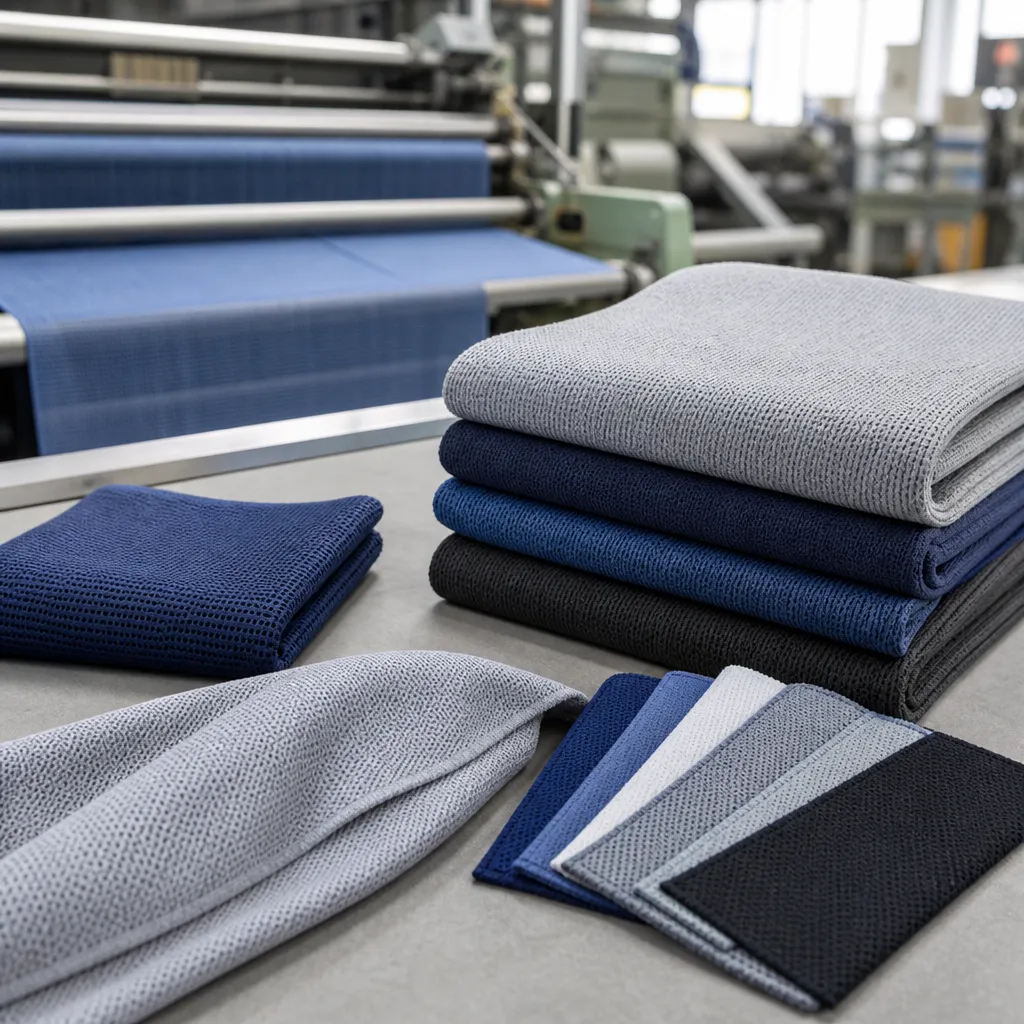
Start with the failure you cannot afford
We do not begin these programs with color cards or private-label bands. We begin with the end-use failure. A cloth for optical surfaces fails if it leaves lint or drag marks. A cloth for household cleaning fails if absorbency drops after repeated laundering. A detailing cloth fails if edge construction scratches piano-black trim. If you do not define the failure first, mills will quote on different constructions and the price spread becomes meaningless.
- For glass and lens cleaning, prioritize low-lint warp knit, fine denier, and low drag on smooth surfaces.
- For general household wipe-down, prioritize absorbency, colorfastness, and wash stability.
- For automotive or screen-safe use, prioritize edgeless or covered-edge construction and particulate control.
- For promotional packs, prioritize printability, carton efficiency, and shade consistency lot to lot.
This is why the best microfiber cleaning cloths sourcing playbook is not one universal template. The same 320 GSM cloth that feels dense in hand may be wrong for coated glass if the pile is too grabby, while a 200 GSM suede-like knit can outperform it on optics but underperform on spill pickup.
Choose construction before you discuss price
Most buyer mistakes happen one layer below GSM. They ask for a "soft microfiber cloth" and receive quotes from different knit families. In practice, construction changes wiping behavior more than small GSM shifts. For cleaning cloths, the two common starting points are warp knit and weft knit. Warp knit is usually tighter, more dimensionally stable, and cleaner on glass. Weft knit is often softer and bulkier, but can distort more after washing if heat-setting is inconsistent.
| Construction | Typical GSM | Best use | Common risk |
|---|---|---|---|
| Warp knit | 180-260 | Glass, optics, smooth surfaces | Less plush feel if buyer expects bulky hand |
| Weft knit | 220-340 | General cleaning, household multi-use | Higher shape drift after wash if finishing is weak |
| Coral fleece | 300-420 | Dusting, absorbent wipe-down | Too much pile for streak-free glass |
| Suede knit | 180-230 | Screens, lenses, print-friendly promo packs | Lower water pickup than plush constructions |
Two topic-specific details matter here. First, ultrasonic cutting behaves differently on warp knit and weft knit. On some lower-density weft structures, the sealed edge can harden slightly and feel sharper than buyers expect. Second, split-fiber quality is not just a marketing phrase. If the polyester-polyamide split is incomplete, the cloth can feel smooth in hand but lose capillary pickup in use. We often catch that through a simple absorbency comparison between approved sample and bulk pilot wash lot.
The spec sheet lines that prevent 80% of claims
If your RFQ says only size, color, and GSM, expect a broad range of offers and a higher chance of disappointment. For bulk orders, we recommend locking at least these lines: composition, knit type, finished GSM tolerance, cut size tolerance, edge method, pile side description, wash test requirement, and packing method. Composition should be stated clearly, such as 80/20 polyester-polyamide or 85/15 if cost pressure is stronger and the end-use allows it.
| Spec line | Recommended buyer wording | Why it matters |
|---|---|---|
| Composition | 80% polyester / 20% polyamide | Controls softness, absorbency, and cost |
| Finished weight | 240 GSM ±5% | Prevents underweight substitutions |
| Size | 40 x 40 cm ±1 cm after finishing | Reduces carton and usage inconsistency |
| Edge | Ultrasonic cut or hidden overlock | Affects scratch risk and labor cost |
| Colorfastness | Meet ISO 105-C06 and ISO 105-X12 agreed grade | Prevents bleeding and crocking claims |
| Wash stability | After 5 cycles, shrinkage within agreed limit | Prevents shape drift in retail or kit packs |
- State whether GSM is finished GSM, not greige.
- State whether size is before or after wash.
- State whether mixed colors in one carton are allowed.
- State whether logo print area must avoid thick pile zones.
For buyers comparing mills, this is the shortest path to useful quotes. We cover RFQ structure in more detail in build-towel-tech-pack-that-mills-can-quote.html, but microfiber cloths especially need edge and knit descriptions because sample feel alone can hide construction differences.
How we test a microfiber cleaning cloth before approving bulk
Lab work for this category should stay practical. We suggest one formal test set and one simple bench set. On the formal side, colorfastness to domestic laundering can be checked against ISO 105-C06. Rubbing fastness can follow ISO 105-X12. Dimensional change after washing should be recorded from a controlled cycle, and mass per unit area can be checked against the relevant textile method used by your lab partner. On the bench side, we use mirror wipe, black acrylic panel wipe, water-drop pickup time, and white-glove lint transfer after one wash.
- Approve handfeel and appearance on lab sample.
- Run one small wash trial on the same sample to expose early edge curl or linting.
- Approve a pre-production sample from bulk fabric, not only from development yardage.
- Hold back one sealed approval swatch and one full cloth as golden sample for final inspection.
A construction quirk worth noting: dark navy and black microfiber often pass visual review but still fail crocking expectations when packed immediately after dyeing and softening. We build in extra post-dye clearing and rest time on these shades. Another specific defect mode is "edge memory curl" on aggressively ultrasonically cut cloths. It does not always show on day one; it often appears after the first wash and dry cycle.
A practical cost map for the best microfiber cleaning cloths sourcing playbook
Prices move mainly on composition, GSM, size, edge method, and packout labor. Printing can also change the economics sharply if you need individual polybags, barcodes, or mixed assortments. For a standard 40 x 40 cm microfiber cleaning cloth program from China, MOQ remains 500 pcs per design per color, but the better buying range usually begins at 3,000 pcs because knitting, dyeing, and cut-pack efficiency improve.
| Spec example | Volume | FOB China USD/pc | Notes |
|---|---|---|---|
| 200 GSM suede knit, 30 x 30 cm, ultrasonic cut | 5,000 pcs | 0.34-0.49 | Best for screen or lens-oriented promo packs |
| 240 GSM warp knit, 40 x 40 cm, ultrasonic cut | 5,000 pcs | 0.56-0.78 | Common for streak-sensitive cleaning |
| 300 GSM weft knit, 40 x 40 cm, overlock edge | 5,000 pcs | 0.52-0.72 | Household multi-use, lower edge cost |
| 360 GSM coral fleece, 40 x 60 cm, covered edge | 10,000 pcs | 0.98-1.36 | High absorbency, not ideal for glass |
If a supplier quotes far below these bands, we usually find one of four reasons: lower polyamide content than claimed, smaller true cut size, underweight finished GSM, or looser packaging and QC control. Sometimes the cheap cloth is not really cheaper in use. A 240 GSM warp knit that survives 90 service washes with stable wiping behavior can cost less per month of use than a bargain cloth that loses shape after 18 to 25 washes.
MOQ, color splits, and why assortment plans get expensive fast
Buyers often assume microfiber is easy because the fabric is lighter than cotton towels. The opposite can happen in small runs. If you split one 6,000-piece order into six colors and three printed cards, the hidden cost shifts from knitting to handling. Each shade needs its own dye lot control, cutting segregation, in-line count verification, and carton marking. The cloth itself is inexpensive; the touches around it are not.
- Base MOQ: 500 pcs per design per color
- Better dyeing efficiency: 1,500-2,000 pcs per color
- Best carton utilization usually starts around 3,000 pcs per SKU
- Individual retail insert or barcode sticker can add USD 0.05-0.14 per pc depending on complexity
For buyers trying to reduce startup exposure, the better move is usually fewer colors and one standardized size, not forcing a mill into extreme color splits. If you need help structuring that discussion, see negotiate-towel-moq-without-killing-margin.html.
Lead times: what is normal and what compresses badly
Microfiber cleaning cloth timelines are shorter than jacquard cotton towels, but they are not same-week items when you require color approval and private-label packing. A realistic schedule for dyed custom bulk is 3-5 days for quotation and spec clarification, 5-7 days for sample making, 2-4 days for buyer comments, 18-28 days for bulk production after approval, and 5-9 days for final inspection, packing closeout, and booking readiness.
| Stage | Typical days | Compression risk |
|---|---|---|
| RFQ review and costing | 3-5 | Low |
| Development sample | 5-7 | Medium if custom shade required |
| Lab dip or color confirmation | 3-6 | High on dark or fluorescent shades |
| Bulk knitting, dyeing, cutting, packing | 18-28 | High if assortments are complex |
| Final QC and export readiness | 5-9 | Medium |
Air freight can rescue small urgent programs, but only if packaging is simple and the goods are already inspection-passed. Once the delay sits in shade approval or rework, freight mode will not fix it. For shipping trade-offs, container-vs-air-freight-towel-orders.html is still relevant even though the article focuses on towels more broadly.
Final inspection points buyers should put in writing
Pre-shipment inspection on microfiber cloths should focus on the small things that turn into large return rates. Because units are low value, claims often come from pack inconsistency rather than dramatic fabric defects. We suggest using AQL levels agreed in advance and keeping the report format simple enough that your supplier cannot hide behind photography of only the cleanest cartons.
- Check actual finished size across at least three cartons from different pallet positions.
- Check GSM on conditioned samples, not only one unconditioned piece from the top carton.
- Rub dark shades against white test cloth for practical crocking review in addition to lab records.
- Inspect ultrasonic edge continuity for skipped seal sections that can fray after wash.
- Check carton odor and humidity if goods were packed quickly after finishing.
That last point matters more than many buyers expect. If cloths are packed before moisture fully equilibrates, carton smell and slight panel-to-panel tackiness can appear, especially on dark shades with heavier softener use. Those issues are preventable if the factory builds enough resting time between finishing and final sealing.
A buyer scenario: the cheapest quote was not the lowest landed risk
Earlier this year, a European distributor compared four offers for a bulk lint-free cleaning cloth program. The lowest quote was for an 85/15 blend in a loose weft knit, nominally 250 GSM, with hot-knife cut edges. The second-lowest quote was a 240 GSM warp knit in 80/20 with ultrasonic cut. On paper the cheaper offer saved USD 0.09 per piece at 8,000 units. After sample wash, however, the first cloth lost shape by nearly 2 cm on one side and left visible fuzz on acrylic display screens.
The buyer selected the second option. Their ex-factory spend increased by USD 720 on that PO, but they avoided a repack and return risk that would have cost several times more once labor, relabeling, and customer credits were counted. This is the kind of math we encourage buyers to do early. The best microfiber cleaning cloths sourcing playbook is really a risk-control document disguised as a product brief.
Related reads
If you are still comparing microfiber constructions, read microfiber-vs-cotton-towel-comparison.html. If your team needs a cleaner RFQ file before asking for prices, use build-towel-tech-pack-that-mills-can-quote.html. For buyers working on automotive or kit programs, auto-detailing-microfiber-towel-program.html adds category-specific notes.
We also recommend towel-gsm-decision-framework.html for teams that over-focus on weight before construction, and how-to-read-oeko-tex-certificate.html if OEKO-TEX 100 Class I claims are part of supplier qualification.
What to send us for a clean first quote
For the fastest usable quotation, send intended end use, target size, composition target, desired GSM, edge preference, color count, estimated annual volume, and required packing format. If you already have a benchmark sample, note what you like and what you want changed. We are OEKO-TEX 100 Class I, BSCI, and ISO 9001 certified, with MOQ 500 pcs per design per color and annual towel output around 2.4 million units across programs.
- Email: [email protected]
- WhatsApp: +86 13205717266
- Factory MOQ: 500 pcs per design / per color
- Useful first message: target use case, size, GSM, composition, edge, and packing
Build a microfiber cloth quote that compares cleanly
Send your target spec, use case, and packing plan. We will flag the lines that move price, wash life, and claim risk before sampling.
Request a Quote →