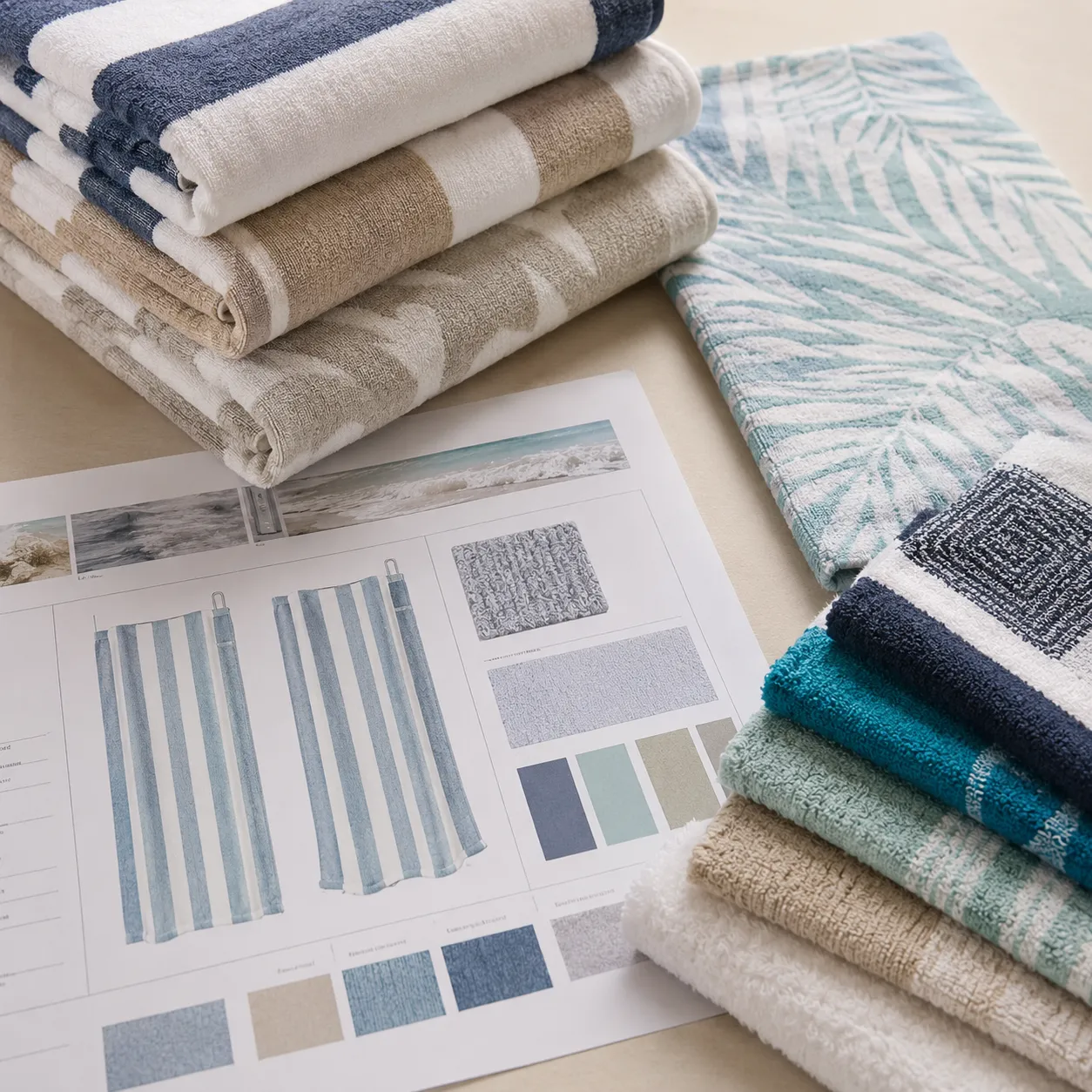
Start with the approval stack, not the towel
Buyers often ask us for "one approval sample" as if a single parcel can clear every risk. It cannot. For a custom towel order, we separate approval into four layers: color, construction, decoration, and compliance record. If one layer is missing, the factory can still make bulk, but the buyer has less control over what arrives.
For an oeko tex certified towel sample approval workflow, our minimum release pack is: one signed tech pack, one approved color standard, one physical towel sample at production-intent construction, one decoration strike-off if applicable, and a certificate check tied to the actual material family being used. OEKO-TEX Standard 100 Class I matters here because many buyers source for baby, spa, hospitality, or skin-contact programs where the acceptable chemical limits are tighter than generic home textile claims.
| Approval layer | What we review | What can fail later if skipped |
|---|---|---|
| Color | Lab dip or print strike in approved shade under D65 light box | Bulk shade drift, uneven face/back appearance |
| Construction | Yarn type, pile density, edge finish, shrinkage after wash | Weight loss, torque, border waviness |
| Decoration | Embroidery, jacquard, woven label, or print position | Logo distortion, puckering, wrong placement |
| Compliance | OEKO-TEX certificate scope, trim match, test file consistency | Claim mismatch, blocked import, rework of trims |
The sample sequence we actually use
We do not move directly from artwork to a final sample. The faster route usually becomes the slower route because each unresolved variable gets pushed into bulk. A workable sequence is shorter than many buyers expect, but each checkpoint has to answer one specific question.
- RFQ and tech pack review: size, GSM, yarn, color count, decoration, packaging, target market
- Lab dip or yarn shade approval: usually 3-5 days
- Handloom or small-lot sample when construction is new: usually 5-7 days
- Proto sample with intended edge finish and branding: usually 7-10 days
- Pre-production sample after order deposit and raw material booking: usually 6-8 days
- Bulk release only after approvals, test review, and signed tolerances
For stock constructions with only a color change, we can collapse the path to lab dip plus pre-production sample. For a new dobby border, low-twist pile, or mixed-material pack-in, skipping the proto stage is where mistakes start.
What belongs in the OEKO-TEX towel sample approval workflow
The keyword sounds like paperwork, but the real work is matching certified inputs to the exact approved build. A valid certificate alone is not enough if the buyer approved one trim set and production uses another. We check the scope of the certificate, supplier name, product class, issue date, and whether the relevant component group is covered.
- Base fabric: cotton yarn or microfiber base must sit within the certified material route
- Dyes and auxiliaries: especially for dark navy, black, and reactive bright shades
- Sewing thread: often forgotten on colored hems and overlock edges
- Labels and hangtags: woven labels, care labels, size stickers, barcode adhesives if they contact the textile
- Decoration inputs: embroidery backing, patch adhesive, print chemistry where applicable
Two sample-stage checks are very specific to this topic and worth calling out. First, we compare the approved care label wording to the claimed certification language so there is no unsupported consumer-facing statement. Second, we verify that any dark contrast binding or colored hook loop is from the same compliant supply chain as the body fabric. Those accessory substitutions are a common reason a clean sample turns into a questionable bulk file.
The physical tests we want before bulk release
A towel sample can look correct on day one and still fail after one wash. We prefer a short, targeted test set before bulk instead of a long laboratory shopping list. The point is to clear the highest-probability failures tied to the chosen construction.
| Test item | Method or reference | Typical internal target |
|---|---|---|
| Dimensional stability | ISO 6330 home laundering | Length/width shrinkage within 3.5% for terry bath items |
| Colorfastness to washing | ISO 105-C06 | Minimum grade 4 color change on mid and dark shades |
| Colorfastness to rubbing | ISO 105-X12 | Dry 4 minimum; wet depends on shade but usually 3-4 |
| pH of aqueous extract | ISO 3071 | Within OEKO-TEX acceptable range |
| Absorbency check | Internal drop test and post-wash handle review | No hydrophobic finish residue on usable face |
If the towel has embroidery, we also wash-check thread bleeding at the logo edge and look for tunneling around satin stitch columns. If it is zero-twist or low-twist, we watch for loop blooming after laundering because a sample can feel soft before wash yet show a fuzzy face after the first cycle.
A worked example: where buyers usually approve too early
One recent spa program is a good example. The buyer wanted a 35 x 75 cm hand towel in 520-540 GSM, combed cotton, sage green body, with a 4.5 cm dobby border and a small woven side label. Annual volume was projected at 36,000 pieces across three call-offs, with an opening order of 9,000 pieces.
The first sample looked good in the box. After one ISO 6330 wash, width pulled in by 4.2%, and the side label edge became slightly abrasive because the fold allowance was too short for that label stock. Neither issue was obvious before laundering. We changed the hem turn-back by 3 mm, moved the side label 18 mm farther from the lower seam, and adjusted the loom width to recover finished size. The second sample landed at 2.8% width shrinkage and a better hand edge.
Cost impact was small. The corrected version added about USD 0.04 per piece at 9,000 units and roughly USD 0.025 per piece at 30,000 units. Reworking a full 9,000-piece lot after sewing would have cost far more once freight, repacking, and delayed launch were included. This is why we push buyers to approve after wash, not straight from the courier bag.
Price and timing by sample stage
Sampling cost depends on how close the project is to an existing loom setup. A plain dyed stock terry program moves faster than a new jacquard border or mixed-pack retail concept. Our MOQ is 500 pieces per design per color for bulk, but sample economics are separate because setup time is real even when piece count is tiny.
| Stage | Typical timing | Typical cost band |
|---|---|---|
| Lab dip set | 3-5 days | USD 35-70 per shade family |
| Construction proto | 5-7 days | USD 90-180 depending on loom change |
| Decorated proto | 7-10 days | USD 120-260 including logo setup |
| Pre-production sample | 6-8 days | Often credited back on bulk order, or USD 60-140 if standalone |
For bulk pricing, a 30 x 30 cm face towel in 450-500 GSM cotton may sit around USD 0.42-0.68 at 10,000 pieces depending on yarn and packaging. A 70 x 140 cm bath towel in 550-600 GSM combed cotton with woven label and polybag can land around USD 3.10-4.45 at the same volume. The sample route should protect that spend, not delay it without reason.
The three documents buyers should sign, and the two they should not rely on alone
A clean approval chain is easier to enforce than a long email thread. We ask buyers to sign three specific records before bulk: the final tech pack, the sample approval sheet with tolerances, and the shade approval reference. These become the production control file.
- Sign the final specification sheet with size, GSM tolerance, yarn composition, finishing, decoration position, and packaging
- Sign the sample approval form after wash with any accepted deviations written clearly
- Sign the color reference using either approved physical standard or Pantone-linked note for guidance
What not to rely on by itself: a photo approval and a generic certificate PDF. Camera white balance hides shade problems, and certificate files prove very little unless they match the actual component set. If your internal team buys from several mills, this point matters even more because certificates are often forwarded without component discipline.
Common failure modes at PP sample stage
The pre-production sample is where we want to catch issues that only appear once the towel is made with booked yarn, live dye lot, and actual sewing line settings. These are not theoretical; they show up in real production.
- Approved shade shifts warmer or duller after bulk dye lot is set
- Pile lean makes one side look darker under store lighting
- Header or dobby border draws in more than towel body during wash
- Embroidery causes local stiffness on lighter GSM constructions
- Care label placement scratches the usable edge on small sizes
- Carton assortment plan mixes approved and non-approved label versions
One technical detail we watch closely is skew between border and body after finishing. On some terry constructions, the border yarn tension and the body loop tension recover differently in drying, creating a visual slant that buyers interpret as bad sewing even when the root cause sits at finishing. Another is silicone residue from softening chemistry, which can briefly improve handfeel but suppress first-use absorbency if overdosed.
Related reads for sample control
If you are tightening your internal sign-off system, these articles connect well with this topic: build-towel-tech-pack-that-mills-can-quote, towel-gsm-decision-framework, and pantone-color-matching-custom-towels.
For compliance and bulk readiness, we also suggest how-to-read-oeko-tex-certificate, negotiate-towel-moq-without-killing-margin, and container-vs-air-freight-towel-orders.
A short approval checklist buyers can use internally
- Confirm the sample matches the latest tech pack revision, not an old PO note
- Wash the approval piece before signing, using the intended care route
- Review OEKO-TEX file scope against base fabric, trims, and decoration inputs
- Record tolerances in writing for size, weight, shade, and logo placement
- Release bulk only after PP sample, not after proto alone
That is the simplest version of an oeko tex certified towel sample approval workflow that still protects the buyer. It is not complicated, but it does require discipline. If a team approves by eye only, or treats compliance files as background admin, small sample shortcuts become expensive bulk arguments.
Need a sample approval plan before bulk?
Send us your towel spec, target market, and decoration method. We can map the sample stages, testing checkpoints, MOQ, pricing range, and production timing before you place the PO. WhatsApp: +86 13205717266 | Email: [email protected]
Request a quote →