Where Certification Cost Actually Enters the Towel
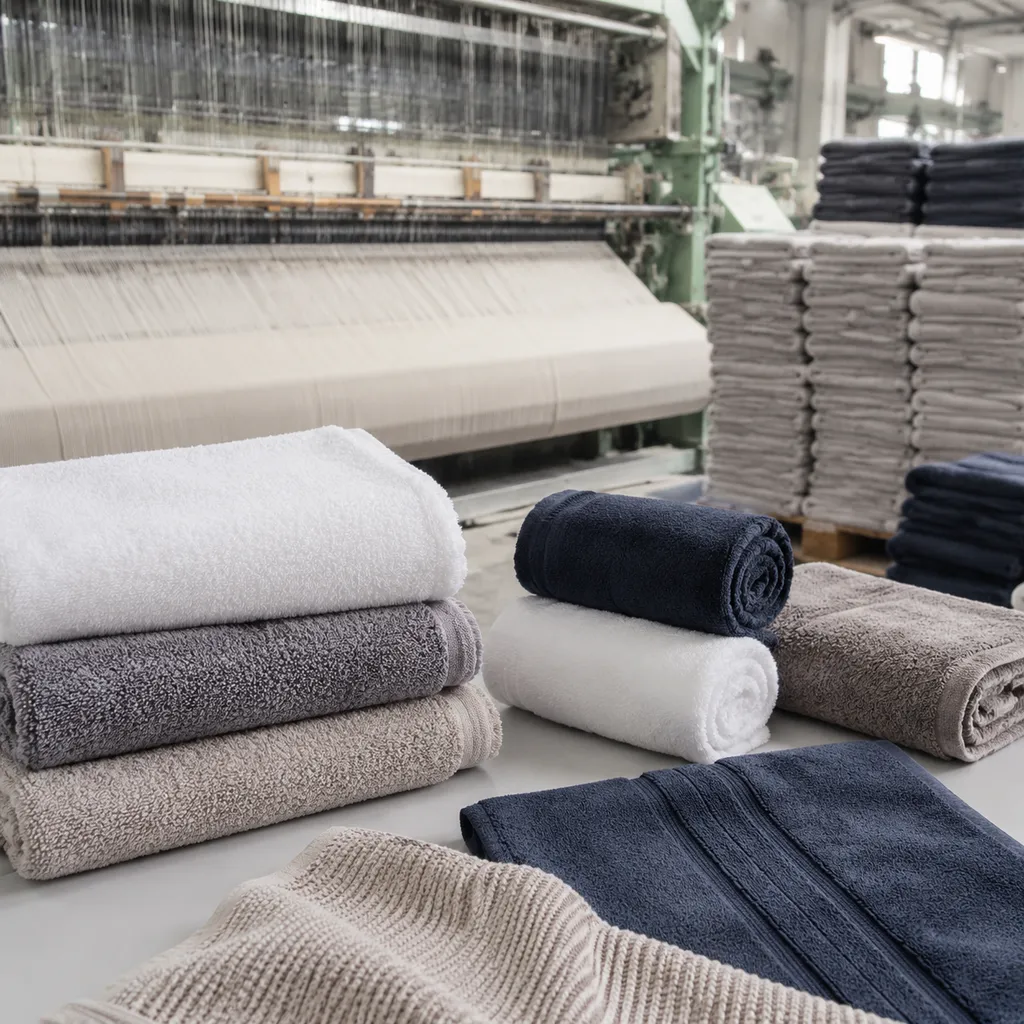
At our mill, OEKO-TEX work starts before weaving. If a buyer needs OEKO-TEX Standard 100 Class I, we cannot treat it as a certificate PDF attached after production. The yarn source, reactive dye lot, softener, silicone finish, sewing thread, label ink, polybag warning print, and even embroidery backing must be checked against the approved chemical input list. That is why a certified cotton towels wholesale program normally costs more than a non-certified line even when both towels look similar on the shelf.
The certificate also changes how we separate material in the factory. For certified orders, our warehouse tags yarn lots by supplier batch, dyeing vats are recorded by recipe code, and finishing auxiliaries are issued against a written production card. These controls reduce the risk of mixed inputs, but they add admin time and slower line changes. For a 500-piece reorder the cost is visible. For a 20,000-piece program it spreads out and becomes less painful.
| Cost area | What changes for OEKO-TEX work | Typical impact on FOB price |
|---|---|---|
| Yarn procurement | Use traceable cotton or blended yarn from approved suppliers; retain lot numbers | +USD 0.04-0.16 per towel |
| Dyeing and auxiliaries | Reactive dyes, softener, fixing agent, and washing agent must match approved chemical list | +USD 0.03-0.12 per towel |
| Batch segregation | Separate production card, warehouse tag, dye vat record, and packing label control | +USD 0.02-0.07 per towel |
| Testing and documents | Certificate scope check, internal pH screening, colorfastness test, buyer file preparation | +USD 0.01-0.09 per towel |
| Decoration materials | Embroidery thread, woven label, transfer print, or backing paper reviewed for restricted substances | +USD 0.02-0.18 per towel |
For buyers comparing suppliers, ask whether the quoted price includes certified inputs for the full towel or only the base terry fabric. A towel with compliant cotton but an unverified printed label is not a clean compliance file for baby, spa, hotel, or wellness retail channels.
OEKO TEX Certified Towel Bulk Pricing Model
Below is the practical oeko tex certified towel bulk pricing model we use when discussing early budgets with brand buyers. These are not retail prices. They are realistic FOB China ranges before ocean freight, import duty, local warehousing, and platform fulfillment. The exact price still depends on towel size, GSM, yarn count, pile height, decoration, packaging, and whether the buyer requires OEKO-TEX Standard 100 Class I, Class II, or only a supplier-level certificate.
| Program type | Example specification | 500 pcs | 2,000 pcs | 8,000 pcs | 25,000 pcs |
|---|---|---|---|---|---|
| Guest hand towel | 40 x 70 cm, 430-480 GSM, combed cotton, dyed | USD 1.18-1.55 | USD 0.96-1.28 | USD 0.82-1.10 | USD 0.74-0.98 |
| Hotel bath towel | 70 x 140 cm, 500-600 GSM, ring-spun cotton, dobby border | USD 4.35-5.90 | USD 3.78-5.05 | USD 3.42-4.62 | USD 3.18-4.28 |
| Spa treatment towel | 50 x 100 cm, 420-500 GSM, low-lint finish, soft handfeel | USD 2.10-2.85 | USD 1.78-2.42 | USD 1.58-2.16 | USD 1.46-1.98 |
| Resort pool towel | 80 x 160 cm, 550-650 GSM, yarn-dyed stripe or border | USD 7.60-10.20 | USD 6.88-9.10 | USD 6.30-8.35 | USD 5.95-7.82 |
| Baby hooded towel | 75 x 75 cm, 360-430 GSM, Class I file, binding edge | USD 3.25-4.45 | USD 2.82-3.78 | USD 2.55-3.42 | USD 2.38-3.15 |
Our MOQ is 500 pcs per design per color. At 500 pcs, the price carries more setup cost because dyeing, documentation, cutting, sewing, QC, and carton marking do not shrink in the same proportion as the order. At 8,000 pcs and above, yarn purchase and dyeing efficiency improve, so the certification premium often becomes a smaller percentage of the final FOB.
- Use 500 pcs when validating a new market, hotel opening package, baby gift set, or DTC launch color.
- Use 2,000-5,000 pcs when the product already has sell-through data and needs stable compliance files.
- Use 8,000 pcs or more when yarn and dye lots can be planned together, especially for seasonal resort or retail replenishment.
- Avoid splitting too many colors if certification documents must be prepared separately for each material combination.
Why Class I Costs More Than a General Towel File
OEKO-TEX Standard 100 Class I is designed for articles used by babies and toddlers up to 36 months. The chemical limits are tighter than general adult-use products. A hotel hand towel used by adults is usually quoted against Class II if the buyer asks for article certification. A baby hooded towel, face cloth for infant care, or nursery towel set should be discussed as Class I from the RFQ stage.
The extra cost is not only the certificate itself. Class I makes us more conservative with fluorescent whitening agents, formaldehyde-releasing finishes, disperse dye contamination, nickel on metal accessories, and printed trims. If the design includes embroidery, the thread and stabilizer must also fit the compliance path. We often reject low-cost satin labels for baby towels because the ink system is not clean enough for the requested class.
| Requirement | Class I baby-use approach | Class II adult-use approach | Buyer risk if unspecified |
|---|---|---|---|
| pH control | Target internal range 5.5-7.5 before shipment; test method aligned with ISO 3071 | Usually accepted around 5.5-8.0 depending on buyer manual | Skin-irritation complaint or failed incoming inspection |
| Colorfastness to washing | Check dark shades after repeated wash; ISO 105-C06 is commonly requested | Same method, but lower-risk colors may be accepted with fewer lab pulls | Color bleed into other baby textiles or hotel laundry |
| Restricted amines | Azo dye screening required through approved dye selection | Required where regulation applies, less strict buyer review on trims | Non-compliant customs or marketplace documentation |
| Decoration backing | Use verified stabilizer and avoid unknown adhesive films | More flexibility for adult promo or hotel use | Certificate covers fabric but not final decorated article |
If your team is new to certificate review, our article on how to read an OEKO-TEX certificate explains the difference between certificate holder, product scope, validity date, and annex coverage. That check should happen before deposit, not after the goods are packed.
The Four Quote Inputs We Need Before Pricing
A certified towel quote becomes inaccurate when the RFQ says only “OEKO towel, best price.” Certification narrows the material choices, but the towel construction still drives most of the cost. A 430 GSM hand towel and a 650 GSM pool towel do not belong in the same budget discussion.
- End use and certification class: hotel, baby, spa, gym, resort, airline, or retail gift set; Class I or Class II if article certification is required.
- Construction: size in centimeters, target GSM, single or double yarn, pile height, border type, hem width, and shrinkage tolerance.
- Color and decoration: white, reactive dyed Pantone shade, yarn-dyed stripe, jacquard logo, embroidery, woven label, or paper band packaging.
- Testing and documents: OEKO-TEX certificate scope, BSCI or ISO 9001 audit need, lab report request, buyer manual, and destination market compliance.
For GSM selection, we normally guide hotel and spa buyers into 450-600 GSM depending on laundering pressure. Gym and salon towels often work better at 330-450 GSM because quick drying matters more than heavy handfeel. For beach and pool towels, 500-650 GSM is common when the towel is guest-facing and rented or reused. If your internal team is still deciding weight, compare the trade-offs in our towel GSM decision framework before asking factories to quote.
Color is another pricing trap. A pale beige towel may be simple under a certified dye route. A saturated navy, deep burgundy, or black towel needs longer washing and better fixation to control crocking and wash bleed. Under ISO 105-X12 rubbing tests, dark pile towels can expose dyeing shortcuts quickly. We prefer to discuss dark colors early so the buyer is not surprised by a higher dyeing surcharge.
Cost Drivers Buyers Often Miss
The most common missed cost is decoration compliance. A plain certified towel is one article. A towel with embroidery thread, metallic logo patch, printed care label, cotton drawstring pouch, and color box becomes a larger compliance file. If those inputs are not controlled, the certified base towel does not protect the final product.
- Embroidery density: A 9,000-stitch chest logo costs less than a 34,000-stitch full-width monogram, but both need compliant thread and backing.
- Jacquard weaving: The logo is built into the weave, so no thread backing is added, but the loom setup and yarn planning increase MOQ sensitivity.
- Reactive printing: Soft handfeel is possible, but print paste and washing need tighter review under certified programs.
- Retail packaging: Paper band, insert card, belly wrap, sticker adhesive, and printed polybag can create separate documentation questions.
Another missed cost is shrinkage allowance. A 70 x 140 cm towel shipped after pre-wash may need to be woven larger, for example 73 x 146 cm depending on yarn and finishing route, so it finishes within tolerance after laundering. If a buyer demands exact retail size after five washes, we must build that into the construction and sample testing. The extra grams are real cost, not factory padding.
For design teams choosing between woven pattern, embroidery, and print, embroidery vs sublimation vs jacquard gives a useful decoration comparison. For color approvals, especially dark certified programs, also review our notes on Pantone color matching custom towels.
MOQ and Color Splits Under Certified Production
Our MOQ is 500 pcs per design per color, but certified production rewards simpler color planning. If a buyer orders 500 pcs each in six colors, every shade needs separate dyeing control, shade approval, and QC record. If the same 3,000 pcs is split into two colors, the unit price usually improves and the compliance file is cleaner.
| Order plan | Factory handling | Pricing effect | Recommendation |
|---|---|---|---|
| 500 pcs x 1 color | Small dye lot, full setup, single packing run | Highest unit cost | Good for market test or approval launch |
| 500 pcs x 6 colors | Six dye lots, six shade approvals, more carton labels | Often +8-15% versus fewer colors | Use only when retail range requires it |
| 1,500 pcs x 2 colors | Better dyeing efficiency and easier yarn allocation | Moderate unit cost | Balanced plan for small hotel or spa group |
| 5,000 pcs x 1 color | Stable vat planning, better material yield | Lower unit cost | Best for core white, ivory, charcoal, or resort signature color |
A clean oeko tex certified towel bulk pricing model should show whether price breaks come from volume, fewer colorways, simpler packaging, or changed GSM. If a quote drops sharply without explanation, check whether the supplier removed the certified input requirement or changed yarn quality.
We push back on buyers who request six launch colors at the minimum quantity and then ask for the same unit price as a 10,000-piece white towel order. The fabric may be the same family, but dyeing, documentation, and leftover risk are not the same. A better plan is to launch two proven colors, hold one lab dip for backup, and add new shades after the first sell-through or property usage data.
Testing, Audit, and Document Fees to Budget
LUMA & CO. TEXTILE operates under OEKO-TEX 100 Class I, BSCI, and ISO 9001 systems. We still separate three types of documents in buyer conversations: factory certificates, product-scope certificate coverage, and shipment-specific test reports. They are related, but they are not the same.
- Factory certification: BSCI and ISO 9001 show management and audit systems; they do not automatically prove chemical safety of one towel lot.
- OEKO-TEX certificate scope: The certificate must cover the relevant towel material, class, and production route.
- Internal QC records: pH screening, GSM check, size after wash, color shade record, needle inspection, and carton audit.
- Third-party lab report: Buyer-paid or shared depending on contract; useful for high-risk markets or baby-use claims.
For shipment testing, we commonly see buyers request dimensional change after washing, colorfastness to laundering under ISO 105-C06, rubbing fastness under ISO 105-X12, absorbency check, fiber composition, and pH using ISO 3071. Hotels sometimes add linting and weight-loss checks after 20 industrial wash cycles. Baby and wellness brands may add formaldehyde and extractable heavy metal screening if their marketplace or retailer asks.
A small lab package may cost USD 180-420 for limited physical and colorfastness checks. A broader chemical and performance package can reach USD 650-1,400 depending on country, testing body, and number of colors. If the order is 20,000 towels, this is minor per unit. If the order is 500 towels, the lab cost can change the landed economics. That is why the oeko tex certified towel bulk pricing model should separate product cost from optional third-party testing.
Lead Time: Certified Orders Are Not Always Slower
Certified production is only slow when the specification is late or the materials are not pre-approved. If the buyer confirms class, color, size, GSM, and packaging early, the timeline is close to a normal custom towel order. The delays usually come from unclear certificate scope, changing Pantone shades after lab dip, or adding unverified trims after sample approval.
| Stage | Typical days | What can delay it |
|---|---|---|
| RFQ and certificate scope check | 1-3 days | Unclear end use, missing class requirement, unknown destination market |
| Lab dip or yarn color approval | 5-9 days | Dark shades, fluorescent tones, buyer revisions |
| Sample weaving and finishing | 7-14 days | New jacquard artwork, special border, custom binding |
| Bulk production | 22-38 days | Peak season yarn allocation, many color splits, embroidery bottleneck |
| Final QC and export packing | 3-5 days | Carton mark revisions, failed shade sorting, missing label approval |
For most certified towel programs, we advise 38-60 days from approved sample to ready-to-ship bulk goods. Ocean freight then adds another 18-38 days depending on destination port and service. Air freight is possible for small replenishment, but it often destroys the cost advantage of towel manufacturing because towels are bulky. For freight decisions, our container vs air freight towel orders article explains carton volume and chargeable weight issues.
A Practical Cost-per-Use Check
Certification should not be used as an excuse to overbuild every towel. A spa face towel washed twice daily needs different economics than a retail gift towel used weekly at home. Still, buying the cheapest uncertified towel can be expensive if it fails the channel requirement or loses softness quickly.
Take a 50 x 90 cm treatment towel at 460 GSM. A compliant construction at USD 1.62 FOB may survive around 95 commercial wash cycles before downgrading to back-of-house use. A cheaper non-certified version at USD 1.31 FOB may look acceptable at receipt but start greying and edge-curling around 48-55 washes in alkaline laundry. On towel cost alone, the certified option is roughly USD 0.017 per use at 95 cycles, while the cheaper towel is around USD 0.025 per use at 52 cycles. This does not include freight, laundry, or guest complaint cost.
The important point is not that every certified towel lasts longer. The point is that certified sourcing usually forces cleaner input control, better process records, and fewer unknown chemicals. If the construction is also specified properly, the buyer gets both compliance and better operating predictability.
Buyer Checklist Before You Approve the Price
Before approving an OEKO-TEX towel quote, ask for the commercial and technical details in the same file. A low price without construction data is not a quotation; it is a placeholder. We prefer to receive a tech pack, but a clear email can also work if it includes the points below.
- Confirm towel type, size, GSM range, yarn type, color, border, hem, and shrinkage tolerance.
- State whether OEKO-TEX Standard 100 Class I or Class II is needed, and whether the final decorated article must be covered.
- List decoration method, stitch count or artwork size, label material, packaging type, and carton marking needs.
- Define inspection level, wash-test expectation, colorfastness requirement, and whether third-party lab testing is included.
- Ask for price by MOQ tier: 500 pcs, 2,000 pcs, 8,000 pcs, and any annual call-off quantity if relevant.
Related reads: if your team is still building the RFQ file, start with build a towel tech pack that mills can quote. For certificate review, use how to read an OEKO-TEX certificate. For MOQ pressure, compare options in negotiate towel MOQ without killing margin.
Related reads for product-specific programs: hotel buyers can review our hotel towel sourcing guide 2026, spa buyers can compare cotton choices in spa towels need different cotton than hotel, and beach or resort teams can check beach towels in bulk buyers guide.
Price a Certified Towel Program
Send us your size, GSM, color, certification class, decoration artwork, and target quantity. We will quote MOQ 500 pcs per design per color with realistic FOB tiers, lead time, and document scope. WhatsApp: +86 13205717266 or email [email protected].
Request a certified towel quote →