Where the MOQ line actually moves
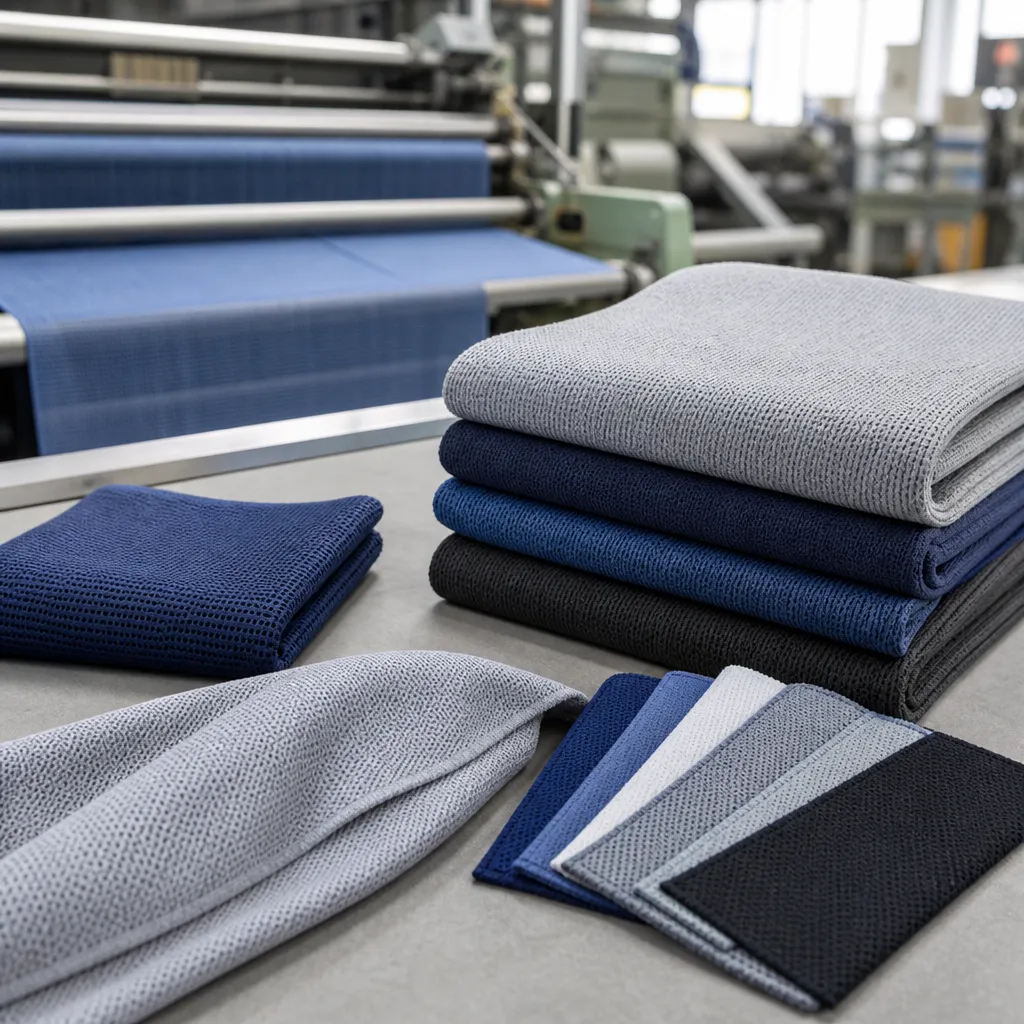
For cooling towels for neck MOQ and pricing, the minimum is rarely controlled by fabric alone. The real breakpoints come from dye lot size, print setup, pouch matching, and how many SKUs the buyer wants to split into. Our baseline MOQ is 500 pcs per design per color, but that works cleanly only when the towel body, edge stitch, care label, and packing are not fragmented into too many small runs.
A plain solid-color evaporative towel in 30 x 100 cm or 30 x 90 cm microfiber can run with less setup friction than a full-bleed printed item. Once the brief adds Pantone-sensitive pouch fabric, barcode stickers by retailer, or multilingual insert cards, the order behaves more like a private-label program than a simple promo item.
| Order setup | Typical MOQ outcome | Why it lands there |
|---|---|---|
| 1 color towel, 1 logo, bulk packed | 500 pcs | Uses standard knitting and one print setup |
| 2 body colors, same logo, mesh pouch | 1,000 pcs total, usually 500 each color | Color split is manageable but pouch matching adds handling |
| 4 colors, private label card, barcode by SKU | 2,000-3,000 pcs total | Small splits start wasting dyeing and packing efficiency |
| Full sublimation look, custom bottle or tube pack | 3,000 pcs and up | Decoration and packout become the MOQ driver |
- A color split is usually the first thing that pushes the order above the headline MOQ.
- A custom pouch often has its own practical minimum, especially if the mesh and drawcord color must match the towel.
- A retail insert card with separate languages can create another hidden MOQ if each market needs its own packout.
- A single universal design with one hangtag and one carton mark keeps the entry quantity realistic.
Three buyer scenarios from recent RFQs
The cleanest way to quote this category is by usage case, not by generic towel language. A charity race organizer, a sporting-goods brand, and an industrial safety distributor can all request the same phrase on the PO, yet they need different cost structures.
| Buyer type | Common spec | Price-sensitive point | Factory caution |
|---|---|---|---|
| Event organizer | 30 x 90 cm, 150-180 GSM, screen logo, polybag | Landed unit cost | Low GSM can feel dry and harsh if knit is too open |
| Fitness or outdoor brand | 30 x 100 cm, 170-200 GSM, embossed pouch, private label | Brand presentation | Packaging complexity can cost more than the towel body |
| Safety distributor | 34 x 100 cm, darker shades, bulk cartons, repeat reorders | Supply continuity | Need stable absorbency and colorfastness across batches |
One race order we handled last season used a 145 GSM warp-knit polyester/polyamide cooling fabric with overlock edge and one-color screen print. The buyer originally asked for five colors across 2,500 pieces. After we showed how the setup cost diluted poorly at 500 each, they moved to two body colors and saved roughly USD 0.09-0.14 per piece versus the five-color split, depending on packing choice.
Another project for a European outdoor brand kept the towel itself simple but added a silicone badge on the pouch, folded instruction leaflet, FSC paper sleeve, and EAN sticker by color. The towel cost was not the problem; the packing bench time was. That is common in neck cooling towel wholesale programs where the accessory set starts behaving like a gift item.
Fabric choice changes price faster than logo method
Most cooling towels for neck use fall into two workable constructions: warp-knit cooling microfiber and interlock or smooth-knit printed microfiber. The first one is usually chosen for active evaporation and hand feel after wetting. The second is chosen when artwork coverage matters more than peak cooling response.
- Warp-knit cooling microfiber: better air passage, lighter hand, faster activation after soaking and snapping.
- Smooth printed microfiber: cleaner graphics, stronger photo-print appearance, slightly less open structure.
- Higher polyamide content can improve touch and water pickup, but it raises yarn cost.
- Cut edge with cover stitch looks tidier for retail, while overlock edge stays cheaper for event volume.
For OEM orders we commonly quote 140-200 GSM. Below about 135 GSM, the towel can feel too thin once repeatedly wrung out. Above 210 GSM, the cooling effect slows because the fabric holds more water mass, which is not always what runners or field crews want around the neck. Buyers looking only at weight sometimes miss that construction matters more than the GSM number alone.
| Fabric route | Usual GSM | FOB China price band at 3,000 pcs | Best fit |
|---|---|---|---|
| Basic warp-knit with screen print | 140-160 GSM | USD 0.56-0.78 | Mass event giveaways |
| Mid-grade warp-knit with pouch | 160-185 GSM | USD 0.79-1.08 | Sports retail and club programs |
| Smoother print face with branded pack | 170-200 GSM | USD 1.02-1.46 | Private label retail |
| Higher-spec set with custom bottle/tube | 170-200 GSM | USD 1.48-2.10 | Promotional kits and boxed sets |
What should be on the RFQ before we quote
Quotes drift when the buyer sends only a reference photo and a target price. For this category, a usable RFQ needs dimensions, GSM range, fabric composition, logo method, pouch requirement, and packout style. If any of those fields stay blank, the number we return is only provisional.
- State the finished size, such as 30 x 90 cm or 34 x 100 cm.
- Give a GSM window, for example 150-170 GSM rather than just 'lightweight'.
- Name the logo route: screen print, heat transfer, embossed patch, or woven label.
- Specify whether the pouch is stock, semi-custom, or fully matched to the towel.
- List compliance needs such as OEKO-TEX STANDARD 100 Class I, BSCI, or retailer testing protocol.
- Confirm outer carton target, barcode format, and shipping term if you need a landed comparison.
If the program is for a chain store or a large distributor, we also ask whether the towel will be sold wet-activation ready with instruction artwork. That affects label wording, folding sequence, and in some countries the care statement layout.
The testing points that separate workable stock from complaint stock
This category gets returns for reasons that do not show up in a beauty-shot sample. A neck cooling towel can print well and still fail in use if absorbency is inconsistent or the logo cracks after repeated wringing. We check these programs with a different lens than standard bath or beach lines.
- Colorfastness to washing under ISO 105-C06 matters when dark shades are paired with white pouches or white overlock thread.
- Colorfastness to rubbing under ISO 105-X12 is important for heavy logo areas, especially on navy, red, or black goods.
- Water absorbency / wetting behavior should be compared across sample and bulk, because finishing chemistry can change activation feel.
- Dimensional stability after washing under ISO 5077 helps catch edge torque and shrink distortion on longer neck sizes.
One recurring defect mode in evaporative cooling towel OEM production is uneven hand feel across the roll after finishing. The towel still weighs correctly, but one zone activates quickly while another feels slightly sealed. We watch that during bulk by checking strike-off fabric from different roll positions rather than approving only one showroom sample.
Another issue is logo edge chipping after repeated snapping. This shows up more on heavier ink deposits and on prints placed close to fold lines. For that reason we often recommend a smaller chest-style logo area on one end of the towel instead of a large block print across the center panel.
Packaging can add more cost than buyers expect
A basic bulk-packed towel is straightforward: fold, polybag if needed, carton, ship. The cost profile changes fast when the order includes pouch assembly, bottle insertion, printed card, sticker sequencing, and carton assortment by retailer.
| Packing format | Typical added FOB cost | Operational note |
|---|---|---|
| Bulk pack in export carton | USD 0.00-0.03 | Lowest labor route |
| Individual polybag with insert card | USD 0.05-0.11 | Common for event and promo distribution |
| Mesh pouch with care card | USD 0.12-0.24 | Needs pouch sourcing and assembly line time |
| Bottle or rigid tube set | USD 0.28-0.54 | Cube increases freight and damages matter more |
For buyers comparing factories, this is where quotes can look artificially low. Some suppliers price the towel body first and leave out barcode application, inner pack sorting, or spare insert allowance. We prefer to show those lines clearly so the landed comparison is usable.
Related reads: if you are comparing decoration routes, see embroidery vs sublimation vs jacquard. If you want the RFQ sheet mills can quote without guesswork, use build a towel tech pack that mills can quote and pantone color matching custom towels.
Lead times for summer programs
Cooling items are seasonal, and the calendar punishes late approvals. Once the Northern Hemisphere summer queue builds, a buyer who waits for artwork revisions in April can lose the clean shipping window for May retail floors.
| Stage | Typical days | What delays it |
|---|---|---|
| Quote and spec confirmation | 2-4 days | Missing dimensions, artwork, or packout details |
| Sample making | 5-9 days | New print screens, pouch color matching, revised labels |
| Lab checks and approval | 3-6 days | Waiting on colorfastness or buyer comments |
| Bulk production | 18-28 days | Peak-season loading and accessory arrivals |
| Booking and export handoff | 4-9 days | Container space, carton marks, final document review |
A realistic full cycle for custom cooling towel pricing projects is 32-50 days from confirmed sample to FOB readiness. Air shipment can compress the delivery calendar, but it rarely fixes lost time caused by late approvals on labels or pouches. For low-cube event orders, air can still make sense; for retail sets with bottles or tubes, cube cost escalates quickly.
- Approve the packing mockup at the same time as the towel sample.
- Lock the barcode matrix before bulk starts, not after cartons are made.
- Keep the first PO to fewer SKUs if the selling season is close.
- Ask for an inline photo checkpoint when pouch and towel are assembled together.
How we help buyers lower cost without hollowing out the product
There are practical savings moves that do not damage the user experience. The safest one is usually SKU reduction. Going from six body colors to three often saves more than dropping the fabric to an uncomfortable GSM. Another is switching from a fully custom pouch to a stock black or gray mesh pouch with a branded card outside.
We also look at print coverage. A compact one-end logo can cut print cost and reduce failure risk during wringing. On some programs, moving from an inserted bottle pack to a flat pouch format saves both assembly time and freight cube, which matters more than a few cents on FOB.
- Reduce color count before reducing fabric weight.
- Use stock pouch components where brand guidelines allow.
- Keep one universal insert for multilingual markets when legally acceptable.
- Reserve retail box formats for higher-value channels, not every order tier.
One distributor brief we adjusted this spring kept the same 32 x 100 cm towel, same navy body, same woven label, but changed from bottle pack to mesh pouch and consolidated four carton assortments into two. The FOB saving came out around USD 0.21 per set, and the container count improved because the cube packed tighter.
A practical quote range for buyers planning this category
For cooling towels for neck MOQ and pricing, buyers should expect a broad spread because the category sits between promotional textile and light private-label accessory. At the entry end, a simple event towel can stay below one dollar FOB. Once custom pouching, retail cards, and more controlled branding enter the brief, the number moves into a different bracket.
| Program level | Typical volume | FOB China guide | Notes |
|---|---|---|---|
| Entry promo | 500-1,000 pcs | USD 0.68-0.95 | Simple towel, limited color split |
| Mid-volume branded | 1,500-3,000 pcs | USD 0.88-1.22 | Better hand feel, pouch or card added |
| Retail private label | 3,000-8,000 pcs | USD 1.10-1.62 | Higher packaging control and labeling |
| Accessory set program | 5,000 pcs and up | USD 1.55-2.25 | Bottle, tube, or gift-style packout |
Those bands assume standard export packing, normal artwork complexity, and no unusual compliance add-ons. If the buyer needs third-party inspection, retailer-specific transit testing, or multilingual legal review on inserts, we budget those separately rather than hiding them inside the towel line.
Related reads: for volume strategy, see negotiate towel MOQ without killing margin. For freight decisions once the PO is approved, see container vs air freight towel orders and custom microfiber towels wholesale guide.
What we need to quote your program accurately
Send the intended size, target GSM, artwork file, quantity by color, packaging sketch, destination market, and compliance requirement. We can then advise whether the order should run as a simple promo build or as a full private-label neck cooling towel wholesale program. Our standard MOQ remains 500 pcs per design per color, and we will say directly when the requested SKU split stops making economic sense.
We manufacture under OEKO-TEX STANDARD 100 Class I, BSCI, and ISO 9001 controls, and we can discuss whether your brief fits stock materials or needs a custom development route. For inquiries, buyers usually reach us fastest on WhatsApp +86 13205717266 or by email at [email protected].
Need a clear MOQ and pricing quote?
Send your size, GSM target, color split, logo method, and packaging plan. We will map the workable MOQ, price band, and production timeline before sampling starts.
Request a Quote →