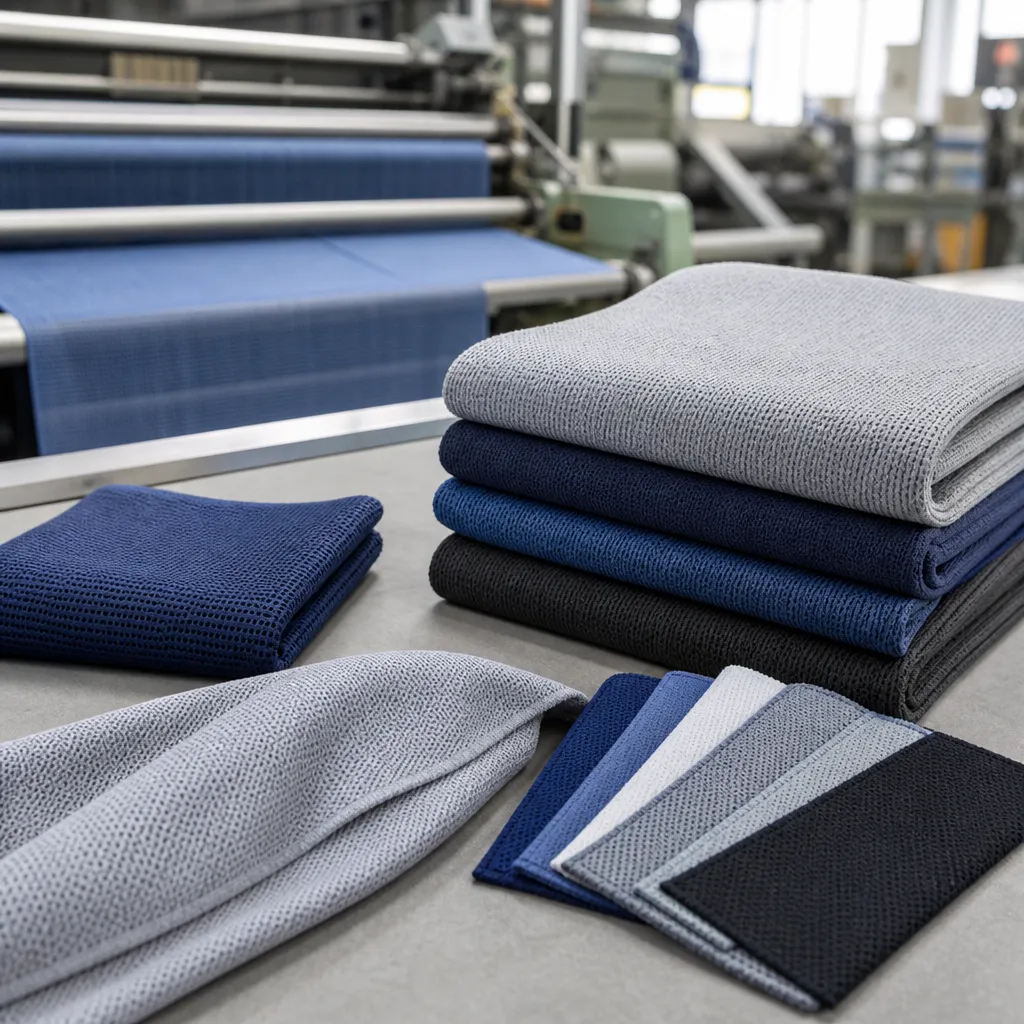
Start with the surface, not the cloth
We see the cleanest buying process when the brand first defines what the cloth touches: coated glass, piano black plastic, stainless steel, eyewear lens, car paint, gym equipment screen, or household multi-surface use. A 250 GSM coral fleece cloth for water pickup behaves very differently from a 200 GSM tight-knit suede-style cloth for lens cleaning. If the end use is unclear, the mill will quote a generic option, and the sample round gets longer and more expensive.
| End use | Recommended construction | Typical GSM | Main risk if underspecified |
|---|---|---|---|
| Optical and screen cleaning | Warp knit or suede microfiber, short pile | 170-220 | Haze marks and lint on glossy surfaces |
| Household all-purpose wiping | Terry knit microfiber, split fiber | 220-320 | Weak absorbency and poor dust pickup |
| Auto interior and wax removal | Dual-pile terry or pearl weave | 300-380 | Edge scratching and streaking |
| Glass polishing | Low-pile tight knit, edgeless or ultrasonic cut | 180-260 | Drag, residue smear, visible edge marks |
| Heavy liquid pickup | Coral fleece or twisted loop | 350-520 | Slow pickup and early saturation |
- Ask your team what visible failure matters most: lint, scratching, streaking, absorbency loss, or color bleed.
- Name the target surface in the PO line, not just "cleaning cloth".
- If one SKU must serve two uses, state the priority use. A compromise cloth rarely performs equally well on glass and on spill pickup.
The three spec lines that change performance fastest
For this product category, three lines move performance more than the rest: fiber blend, knitting structure, and edge finish. Buyers often focus on color and size first because they are easy to compare, but performance claims usually fail around these three technical points.
| Spec line | Common options | What changes in use |
|---|---|---|
| Blend ratio | 80/20, 85/15, 70/30 polyester/polyamide | Higher polyamide usually improves softness and oil pickup, but raises cost |
| Fabric structure | Terry, suede, waffle, pearl, coral fleece | Changes drag, absorbency, pile stability, and polish finish |
| Edge construction | Overlock, hidden edge, laser cut, ultrasonic cut, edgeless | Changes scratch risk, edge fray, and wash stability |
On blend ratio, 80/20 remains the standard commercial choice for most bulk programs because it balances cost and cleaning performance well. We quote 70/30 only when the buyer has a defined softness or detailing requirement and accepts the price increase. On edge construction, ultrasonic cutting is useful for low-pile glass cloths because it seals the edge more consistently than raw laser cut on some knit structures. That is a specific process point worth writing into the spec if your product is sold for streak-free glass work.
Microfiber Cloth 2026 Buyer Guide: which construction fits the job
If we reduce the category to one practical sourcing question, it is this: what knit structure gives the user the least complaint rate on the target surface. A microfiber cloth 2026 buyer guide should help buyers avoid overbuying a thick plush fabric when the real need is low lint and smooth glide.
- Choose suede or warp knit for lenses, screens, coated glass, and glossy packaging inserts.
- Choose terry knit split microfiber for household and janitorial wiping where dust pickup matters.
- Choose pearl weave for glass and stainless steel where users want a tighter hand and lower drag than terry.
- Choose coral fleece or twisted-loop microfiber for drying and spill absorption, not for delicate polishing.
Two construction quirks deserve attention. First, short-pile glass cloths can feel "thin" to a retail team during handfeel review even when they outperform thicker options on mirrors and screens. Second, plush terry cloths can trap loose finishing lint from production if the pre-shipment air-fluff and post-dye wash sequence is rushed. That is why we prefer to run a wipe-panel check on black acrylic and glass before final packing for dark-color lots.
Tests worth naming in the RFQ
Broad requests such as "good quality" or "lint free" do not give a factory or a QC team a measurable target. We recommend naming a short test list in the RFQ and sample approval sheet. That reduces argument later because both sides know what pass and fail look like.
| Test | Method or reference | Useful benchmark |
|---|---|---|
| Colorfastness to washing | ISO 105-C06 | Grade 4 minimum on color change for medium and dark shades |
| Colorfastness to rubbing | ISO 105-X12 | Dry 4-5, wet 3-4 depending on shade depth |
| Dimensional change after laundering | ISO 5077 | Within +/-3% after agreed wash cycle |
| Fabric mass | ISO 3801 | Within agreed GSM tolerance, usually +/-5% |
| Seam slippage or edge durability | Internal wash cycle + pull check | No edge opening after agreed cycles |
For buyer-specific functional checks, we often add two simple bench tests. One is a glass haze test: wipe a standardized mirror panel with deionized water, then inspect under side light for streak pattern. Another is a black tile lint transfer test after 5 and 20 wash cycles. These are not universal lab standards, but they are practical acceptance tools when the cloth is marketed for visual cleanliness.
- State whether testing is on greige, dyed, or finished cloth. Silicon or softener finish changes results.
- If you sell into automotive detailing, ask for edge abrasion review against piano black trim or similar glossy panel.
- If the cloth is packed wet-use adjacent, confirm odor control expectations after sealed storage.
Related reads: build-towel-tech-pack-that-mills-can-quote.html, microfiber-vs-cotton-towel-comparison.html, and how-to-read-oeko-tex-certificate.html.
What changes the FOB price in a real quote
Price movement is usually easy to explain once the construction is fixed. The biggest cost drivers are blend ratio, GSM, size, edge method, color count, and packaging labor. Dyeing neon shades or very deep black can also lift cost because rework risk is higher and wash-fastness control takes more care.
| Spec scenario | MOQ | FOB China USD/pc | Notes |
|---|---|---|---|
| 30x30 cm, 200 GSM, 80/20 suede, heat cut, bulk pack | 10,000 pcs | 0.19-0.26 | Used for eyewear, screens, promo inserts |
| 30x30 cm, 260 GSM, 80/20 terry, overlock edge, bulk pack | 10,000 pcs | 0.24-0.33 | General cleaning format |
| 40x40 cm, 320 GSM, 80/20 pearl weave, ultrasonic cut, care label | 8,000 pcs | 0.48-0.66 | Glass and detailing channel |
| 40x60 cm, 380 GSM, 70/30 dual pile, hidden edge, retail belly band | 5,000 pcs | 0.92-1.28 | Auto detailing and premium private label |
Our standard MOQ is 500 pcs per design per color, but microfiber cloth projects below 3,000 pcs per SKU tend to carry visibly higher unit costs because knitting setup, dye lot control, and packing labor spread over too few pieces. For a 30x30 cm cloth, moving from 2,000 pcs to 10,000 pcs can reduce FOB by around USD 0.04-0.07 per piece depending on finish and packout. That matters more than trying to squeeze a lower margin from the factory.
Lead time by step, with the delays we actually see
A clean order path is usually shorter than buyers expect. A messy approval path is usually longer than sales teams promise. The most common delay in this category is not one dramatic production problem. It is small back-and-forth on handfeel, edge appearance, or packaging copy after the lab dip and sample have already moved.
- RFQ review and spec clarification: 1-3 days
- Lab dips for dyed shades or material swatches: 3-5 days
- Proto or counter sample: 5-8 days
- Sample approval revision if needed: 4-7 days
- Bulk fabric knitting and dyeing: 12-18 days
- Cutting, edge finish, packing, final inspection: 6-9 days
- Total production after approval: usually 20-30 days
If the order includes custom printed insert cards, barcode labels, or mixed retail assortment packing, add 3-6 days. If the buyer wants third-party inspection before shipment, book it early. In peak season, inspection slots can tighten faster than knitting capacity. For freight planning, the timing guidance in container-vs-air-freight-towel-orders.html is still useful even though the product is smaller.
Common claim patterns and how to spec around them
Claims in microfiber cloth programs usually come back to expectation mismatch. The fabric may be within spec and still be wrong for the user. We push buyers to define the complaint they are trying to prevent because that keeps the spec honest.
- "It leaves lint on glass": often a pile-choice issue or insufficient post-finish cleaning, not simply low quality.
- "It scratched glossy plastic": commonly linked to hard overlock seam, trapped debris at edge, or misuse on sensitive surfaces.
- "It lost shape after wash": usually tied to weak GSM control, high heat drying, or missing shrinkage tolerance in approval.
- "Color transferred in first use": more common on dark navy, red, or black when washing standard is not agreed in advance.
One practical redline: if a brand sells a cloth as scratch-safe for coated screens or automotive piano black surfaces, we recommend avoiding basic overlock edges unless a usage trial proves otherwise. Hidden edge or sealed edgeless construction costs more, but on complaint-prone channels it usually saves money within one reorder cycle.
How we like to see the PO written
The best purchase orders read almost like a condensed tech pack. They are short, but they remove assumptions. This category especially benefits from line-by-line clarity because photos do not tell the mill enough.
- Item name and intended use
- Finished size tolerance and target GSM
- Blend ratio and knit type
- Edge construction and corner shape
- Color reference or Pantone
- Logo method if any, plus placement
- Packout details: bulk, opp bag, belly band, insert, barcode, carton quantity
- Testing standard and approval benchmark
- Incoterm, destination, and required ship window
If your team needs help structuring those fields, build-towel-tech-pack-that-mills-can-quote.html and pantone-color-matching-custom-towels.html are the most relevant references in our library. For projects crossing into auto care, the use-case notes in auto-detailing-microfiber-towel-program.html are also worth reviewing.
Minimum compliance and factory documents
For buyer due diligence, we usually provide OEKO-TEX Standard 100 Class I certification scope details where applicable, BSCI audit documentation, and ISO 9001 quality management records. Those documents do not prove a cloth will clean glass well, but they matter for chemical management, process consistency, and retailer onboarding.
| Document | Why buyers ask for it | What to verify |
|---|---|---|
| OEKO-TEX Standard 100 Class I | Restricted substance compliance for sensitive end-use channels | Certificate validity, product scope, issuing institute |
| BSCI audit | Social compliance review | Factory name, audit date, corrective action status |
| ISO 9001 | Process control and documented quality workflow | Certificate body and current validity |
| Bulk test report set | Lot-level confirmation | Whether results match approved construction and color |
We also recommend checking whether the certificate scope matches the actual item category and not a loosely related textile line. Buyers sometimes collect certificates without confirming product coverage, which creates avoidable compliance questions later.
A workable shortlist for first orders
For a first PO, we usually advise buyers to avoid trying to cover every use case in one launch. Start with one or two cloths, each with a clear job. That simplifies QC, customer feedback, and reorder decisions.
- For retail home cleaning: 40x40 cm, 280-320 GSM, 80/20 terry or pearl weave, soft overlock or hidden edge.
- For optics and screens: 30x30 cm, 170-210 GSM, suede or warp knit, sealed edge, low-lint finish.
- For auto detailing: 40x40 cm or 40x60 cm, 320-380 GSM, 80/20 or 70/30 depending channel, hidden edge preferred.
That approach gives the buyer useful data after the first shipment: actual complaint rate, reorder speed, and whether the market accepts the higher-cost edge and blend options. Those are better signals than trying to optimize ten variables before any product reaches users.
Related reads: custom-microfiber-towels-wholesale-guide.html, auto-detailing-microfiber-towel-program.html, and negotiate-towel-moq-without-killing-margin.html.
Need a quote with testable cloth specs?
Send the target use, size, GSM, blend, edge finish, packout, and ship window. We will quote against a defined spec, not a generic sample photo. WhatsApp: +86 13205717266 | Email: [email protected]
Request a quote →