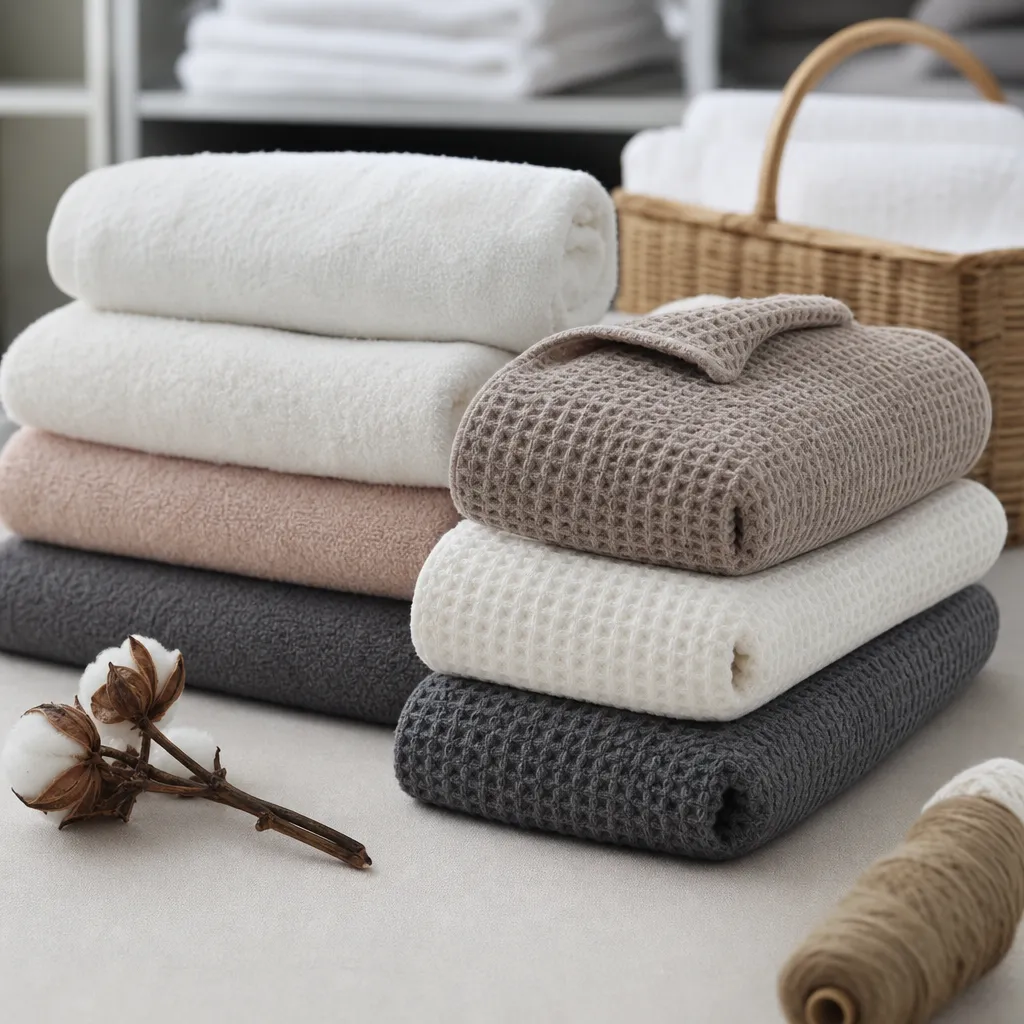
Start with the set logic, not the face feel
A mat-cover towel set is usually two SKUs sharing one design language but solving different jobs. The full-length piece has to stay planted during transitions, absorb sweat without turning heavy, and recover shape after repeated machine washing. The hand or face towel in the set is mainly about quick pickup, soft contact, and easy packing. If both pieces are built from the same fabric just to simplify sourcing, one of them is usually overbuilt or underbuilt.
For most private-label yoga programs, we separate the spec into three layers: the base fabric, the grip-back application, and the finishing details that control skew, edge roll, and wash appearance. That means the first lab review is not just color and hand feel. We ask for basis weight tolerance, yarn construction, moisture spread result, wash shrinkage, and grip-back crack resistance in the same sample signoff file.
| Set component | Common finished size | Typical weight band | Primary job |
|---|---|---|---|
| Mat-cover towel | 61 x 183 cm | 210-290 GSM | Surface grip, sweat pickup, fast drying |
| Mat-cover towel, long fit | 68 x 183 cm | 220-300 GSM | Wider mat coverage, less edge lift |
| Hand/face towel | 40 x 70 cm | 230-320 GSM | Spot drying, face contact, bag carry |
| Bundle pouch cloth | 18 x 25 cm | 120-160 GSM | Packout only, not performance |
The fabric constructions that actually work
In this category, the commercial choice is usually microfiber rather than cotton. Cotton absorbs well, but at yoga-mat dimensions it becomes slow to dry and too bulky once wet. The stable constructions for mat towels are suede knit, short-terry microfiber, and warp-knit brushed microfiber. We see fewer claims with warp knit because it resists laddering better at the cut edge and keeps shape more consistently after printing and grip-dot curing.
- Suede microfiber: flat surface, clean print result, low bulk, dries fast; weaker sweat hold under very heavy perspiration unless weight is raised
- Short-terry microfiber: more pickup and a less slippery touch; if loop height is uneven, dye depth can shade across the roll
- Warp-knit brushed microfiber: best shape stability in many hot-yoga programs; requires tighter brushing control to avoid lint at first wash
- Cotton-poly blend terry: acceptable for accessory hand towels, usually poor choice for full mat covers because wet weight climbs too fast
The two topic-specific defects we watch here are edge smile and dot shadowing. Edge smile is a slight wave that shows after tenter finishing when the center body relaxes differently from the bound edge. Dot shadowing is visible from the face side when grip silicone is deposited too heavily or cured too hot, creating a telegraphed pattern under directional light. Neither issue is obvious in a single pre-production sample hanging still on a rack; both show up after laundering and floor use.
GSM bands by use case
The safest way to set fabric weight is to anchor it to the class format. For hot yoga, lower-to-mid weight with strong spread and quick evaporation beats thick plush fabric almost every time. For restorative or studio retail, touch and drape matter more, so buyers often accept a modestly heavier body.
| Use case | Recommended GSM | Comments | Risk if outside range |
|---|---|---|---|
| Hot yoga mat towel | 220-255 GSM | Fast dry, easier carry, good for silicone dot backing | Below 210 GSM the fabric can skate; above 265 GSM drying time stretches |
| Studio retail all-purpose mat towel | 245-280 GSM | More hand feel, still manageable in wash | Above 290 GSM corners stay damp longer in humid climates |
| Hand/face towel in set | 240-300 GSM | Soft contact and decent absorbency without bulk | Below 230 GSM can feel too thin for face use |
| Travel-focused bundle | 210-235 GSM | Weight and packed volume prioritized | Requires strict skew control to avoid twisted look after wash |
For a 61 x 183 cm mat-cover towel at 238 GSM, finished fabric weight lands around 266 g before grip print and around 279-286 g after dot application and label attachment. That is still light enough for retail fold sets and economical e-commerce freight. At 276 GSM in the same size, the finished packed unit rises quickly once insert card, belly band, and polybag are added.
Yarn spec lines worth writing into the PO
A lot of RFQs stop at "microfiber, 240 GSM." That is not enough to quote accurately or reproduce the feel. For microfiber yoga towels, the yarn line should call out filament fineness and knit structure. A common stable body is 80/20 polyester-polyamide using 75D/144F or 100D/144F filament packages, depending on whether the target is smoother print clarity or slightly fuller pickup. Denier alone is not the whole story, but it changes hand feel, drying speed, and cost.
- 80/20 split microfiber is still the mainstream specification for better moisture pickup than 85/15 economy fabric
- 75D/144F face yarn gives a cleaner surface for all-over print and less coarse hand feel
- 100D/144F construction gives more body and a less transparent look at lower GSM
- Warp knit generally holds dimensions better than weft knit for long rectangular pieces under repeated laundering
- Brushing level should be noted as single-side brushed or double-side brushed; double-side can improve softness but may raise snag risk
If the brand is targeting a printed set, we also specify base whiteness and pre-heat stability because mottled base cloth will shift final color perception. For dark solids, filament quality matters more than visual whiteness, and we focus on streak control across the roll. On one 3,600-set order for a studio chain, changing from an unspecified economy microfiber to 80/20 warp knit 75D/144F increased FOB by only USD 0.18 per full set at that volume, but reduced first-bulk skew claims from 4.9% of cartons to under 1% in the customer’s intake check.
Grip-back spec: where most claims come from
For the full-length piece, backside grip usually decides whether the towel is usable in practice. Silicone dot print is still the most common approach. The spec has to cover dot diameter, spacing, cured add-on, and crack resistance after washing. If the dots are too tall, they feel lumpy and can telegraph through thin mats. If they are too flat, the towel slides under lateral movement.
| Grip-back item | Preferred range | Test method | Acceptance |
|---|---|---|---|
| Dot diameter | 1.8-2.6 mm | Visual + calibrated template check | Within ±0.2 mm of approved standard |
| Dot spacing | 5-9 mm center to center | Template check at 5 positions | No area outside approved repeat |
| Static friction on PVC yoga mat | COF ≥ 0.58 dry; ≥ 0.72 damp | ASTM D1894 adapted with yoga mat substrate | Average of 5 pulls meets target |
| Crack resistance after wash | No full-ring cracking grade worse than 3 | 20 home launderings per AATCC 135, visual grading | No dot drop-off over 3 dots in 100 cm² |
We ask the lab to run friction on the actual mat substrate if the buyer can provide it. A silicone pattern that reads well on a smooth PVC mat can behave differently on natural rubber with a textured top film. In one pilot lot for a mat-and-towel bundle, the same dot geometry measured 0.76 damp COF on the customer’s PVC sample and 0.63 on their rubber mat because the raised texture reduced contact area. That changed the dot spacing before bulk, which is exactly the kind of issue a generic textile-only test misses.
Drying speed, skew, and wash recovery need named standards
The editor’s complaint about unsupported ranges is fair. If a towel brand wants a performance claim, the spec should tie back to a method and a number. We use simple acceptance criteria that can be repeated by a third-party lab rather than house language like "dries quickly" or "holds shape well."
| Property | Test method | Target for bulk approval | Why it matters |
|---|---|---|---|
| Absorbency / wetting | AATCC 79 | Initial wetting time ≤ 4 seconds | Reduces beading on first use |
| Moisture management | AATCC 195 | One-way transport and spreading rate comparable to approved standard | Separates pickup from surface cling |
| Drying performance | ASTM D1909 adapted gravimetric dry-down at 23°C, 50% RH | Reach 50% moisture loss within 32-44 minutes depending on GSM | Controls post-class damp feel |
| Dimensional change | AATCC 135, 3 cycles for sample / 5 cycles for bulk standard | Warp and weft shrinkage within ±4% | Prevents short fit on standard mats |
| Skew / bow | AATCC 179 | Skew ≤ 3%; bow ≤ 2.5 cm across width | Keeps alignment and reduces corner lift |
Skew deserves more attention on long yoga formats than on square gym towels. A long rectangle cut even slightly off-grain looks acceptable folded, but after wash the hemline spirals and one end creeps sideways on the mat. We had a return sample from a retailer where the body was only 2.7% skew before wash, but because the overlock edge was fed with uneven differential tension, the apparent twist after tumble dry looked much worse. The corrective action was not a different fiber. It was resetting feed ratio, trimming the overedge seam width by 1 mm, and rechecking after AATCC 135.
Edge construction changes complaint rates more than buyers expect
A microfiber yoga towel is thin enough that edge finishing becomes a structural decision. Narrow overlock is cheap and flexible, but on premium retail sets it can produce corner curl if thread tension is high. Folded hem looks cleaner on shelf, though it adds weight, cost, and a stiffer edge feel. Bound edges are rare in this category because they create bulk where users press hands and feet.
- 3-thread narrow overlock: most economical, good for value lines, highest risk of visible waviness if body fabric is overfed
- 4-thread overlock with topstitch hold-down: better edge control, slightly higher labor, cleaner presentation
- 6-8 mm turned hem: best retail appearance on printed pieces, needs tighter shrinkage control to avoid roping
- Mitered corner hem: cleaner fold package, but only worthwhile on higher-price programs
For the hand towel in the set, we sometimes allow a different finish than the mat-cover piece. That is not inconsistency; it is practical engineering. A face towel can take a turned hem for nicer shelf presentation while the long towel stays with overlock plus hold-down to avoid excessive edge stiffness.
Print and color choices feed back into the fabric spec
Most yoga sets are sold on visual identity, so artwork decisions affect construction. Full-bleed sublimation pushes buyers toward smoother microfiber surfaces and tighter base stability. Deep charcoal, plum, and saturated green also show silicone strike-through and heat press platen marks more easily if the backing process is not balanced.
If the set uses all-over print, we prefer to sign off a strike-off that includes both face print and grip-back dots on the same panel. Reviewing them separately hides interaction problems. We have seen beautiful face prints turn slightly glossy above dense silicone areas because the curing profile was too aggressive. That is fixable with lower dwell plus a two-stage cure, but only if the trial is built like the final product.
Related reads: if artwork is the main challenge, see pantone-color-matching-custom-towels, embroidery-vs-sublimation-vs-jacquard, and build-towel-tech-pack-that-mills-can-quote.
Cost bands, MOQ, and where the money really moves
Our MOQ is 500 pcs per design per color, but mat towel sets cost differently from standard sports towels because there are two item sizes, grip-back application, and usually more demanding fold-pack presentation. Fabric weight changes cost, but the bigger drivers are grip print coverage, print complexity, and whether the hand towel exactly matches the large piece or uses a shared dyed ground.
| Program type | MOQ | FOB China price band | Lead time |
|---|---|---|---|
| Solid color set, no print, silicone-dot mat towel + plain hand towel | 500 sets | USD 4.25-5.10/set | 28-34 days after approval |
| Printed mat towel + matching printed hand towel | 1,000 sets | USD 5.35-6.70/set | 32-40 days after approval |
| Retail bundle with belly band, insert, barcode label, polybag | 1,500 sets | USD 5.90-7.45/set | 35-45 days after approval |
| Higher-GSM studio line with upgraded hem finish | 2,000 sets | USD 6.60-8.20/set | 38-48 days after approval |
A recent 1,200-set inquiry for a DTC yoga brand illustrates the cost stack clearly. The buyer wanted a 68 x 183 cm printed mat towel at 252 GSM, 40 x 70 cm hand towel, silicone dots on 62% of the back area, folded header card pack, and one barcode label. The final quote sat at USD 6.18 FOB. When the brand reduced dot coverage to 46% and switched the hand towel from full print to dyed solid with woven label, the quote dropped to USD 5.63 without changing the core use performance.
Approval sequence that catches failures before bulk
- Issue a tech pack with size, GSM, yarn composition, knit type, grip pattern, edge finish, and packaging details.
- Approve a fabric hanger or A4 lab panel for hand feel, print effect, and base shade before full sample sewing.
- Review a full prototype with actual backside grip application, not a mockup.
- Run wash, skew, and crack testing on the prototype: AATCC 135 for dimensional change, AATCC 179 for skew/bow, ASTM D1894 adapted for friction, visual grade for dot cracking after laundering.
- Approve a pre-production sample cut from bulk fabric or pilot-run fabric, especially for all-over print programs.
- Lock carton packout and barcode placement before bulk to avoid relabeling delays.
This matters because the defects in yoga formats are interaction defects. Curling can come from fabric tension, hem structure, and silicone cure together. Slippage can come from low friction, but also from a towel cut too narrow for the target mat. Cracking can come from brittle silicone, but also from over-drying the fabric before application. A staged approval process catches those combinations while correction is still cheap.
Related reads: for broader category benchmarking, see microfiber-vs-cotton-towel-comparison, why-gym-towels-fail-after-50-washes, and private-label-vs-white-label-towel-programs.
A practical spec line you can send to mills
If you are building a first RFQ, keep the language tight enough to quote and test. Example: mat towel 61 x 183 cm finished size, 240-250 GSM, 80/20 polyester-polyamide split microfiber, warp knit, single-side brushed suede hand, all-over sublimation face print, silicone dot backing 2.2 mm average diameter at 7 mm spacing, damp COF on buyer mat substrate minimum 0.72 by ASTM D1894 adapted, wetting time maximum 4 sec by AATCC 79, shrinkage within ±4% by AATCC 135, skew maximum 3% by AATCC 179, dot crack visual grade minimum 3 after 20 home launderings, 4-thread overlock with topstitch hold-down, OEKO-TEX 100 Class I compliant production, BSCI and ISO 9001 factory.
For the smaller towel, do not simply copy-paste the full-length specification. Set a separate line for size, edge finish, and optional higher GSM if you want more face comfort. If your target channels include ../industries/yoga-pilates-towels.html, that split spec usually performs better in user reviews than a one-fabric-fits-all bundle.
Need a yoga towel set quote with test-ready specs?
Send us your target size, fabric weight, grip-back layout, and packaging brief. We can quote from a proper spec sheet, propose corrections before sampling, and build to MOQ 500 pcs per design per color. WhatsApp +86 13205717266 or email [email protected].
Request a Quote →