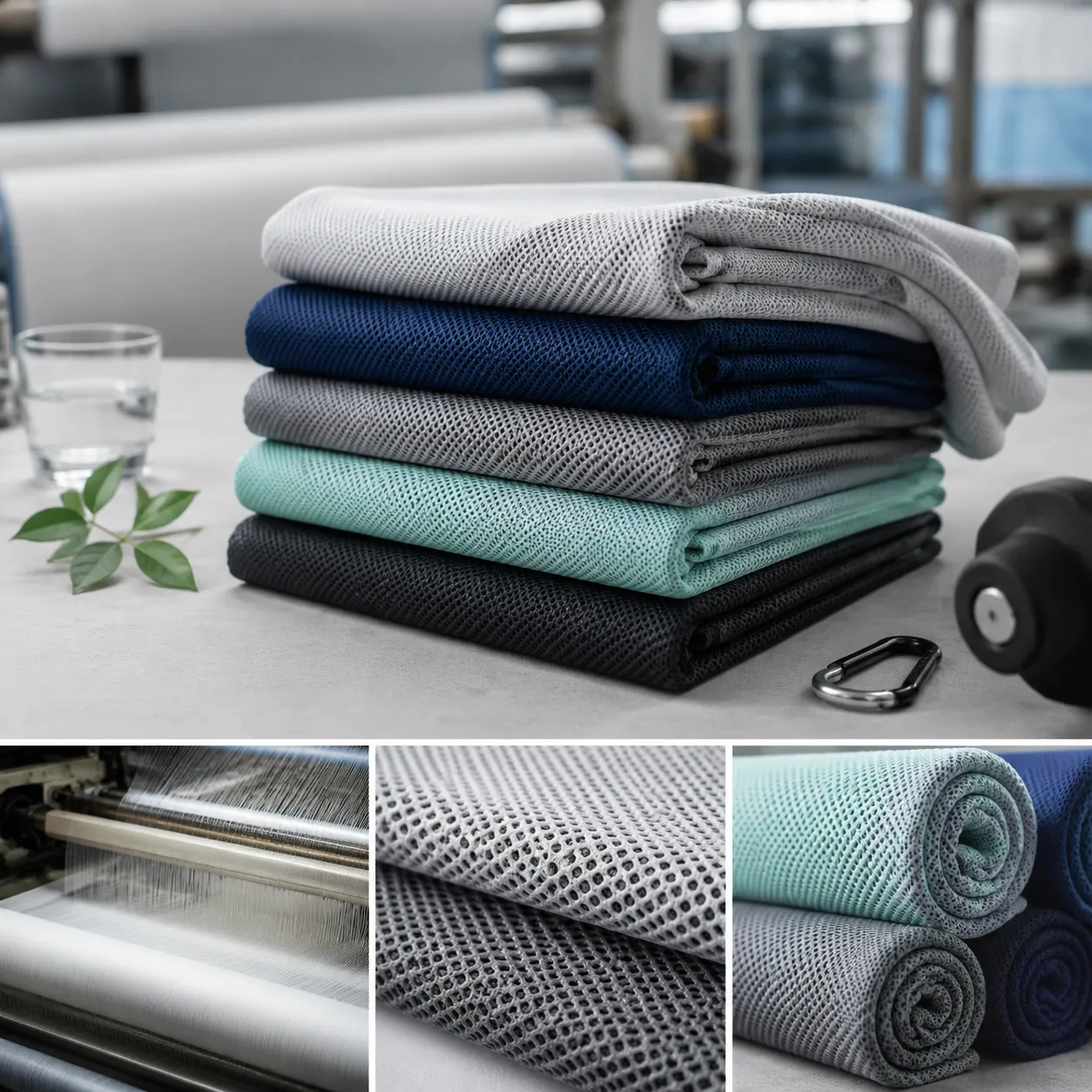
What usually fails first in these programs
For printed microfiber beach towels, the first failures are rarely dramatic tears or obvious shade mistakes. We see quieter problems that only become visible after folding, washing, or poolside use: face print haze after rubbing, white grin at the stitched edge because the hem was pulled too tight, slow water pickup caused by over-heated finishing, and carton mixes where two artworks share one outer box. Buyers who only approve a strike-off and one courier sample miss those points because the towel still looks acceptable when it is dry and flat.
The construction matters here. Most beach programs in this category use 80/20 polyester-polyamide warp knit or weft knit microfiber, usually 220-320 GSM, with one printed face and one plain back. That fabric behaves differently from cotton terry. If tenter temperature runs too high after printing, the hand gets slick and initial absorbency drops. If the overlock differential is off, the long side starts to rope after wash. Those are production variables, not design variables.
- Print-side rubbing haze after 10-20 wet rub cycles, especially in navy, black, coral, and saturated teal panels
- Edge roping on lengths above 160 cm when sewing tension is set for smaller gym towel runs
- Delayed wet-out where a water drop sits on the surface for several seconds before spreading
- Carton assortment errors on multi-artwork orders packed by shift rather than by PO line
Start with a spec sheet that can actually be inspected
A workable inspection starts before bulk. We need measurable tolerances on the PO and tech pack, otherwise the QC team is forced to argue from photos. For this product, we suggest locking five lines early: finished size after wash, actual mass per piece tolerance, fabric composition, edge construction, and print approval standard under D65 light. If any of those are vague, the factory can still ship something that technically matches the artwork and still creates claims later.
| Spec line | Practical control point |
|---|---|
| Finished size | Acceptable average after one home-laundry wash: within +/- 3% on length and width |
| Piece weight | Within +/- 5% of approved sample weight |
| Fabric composition | Common bulk range 85/15 to 80/20 polyester-polyamide; test one bulk lot if claim is critical |
| Edge finish | 3-thread or 4-thread overlock with turnback hem; stitch density commonly 9-11 SPI |
| Print standard | Approved against sealed sample or lab print under D65 viewing, not phone photos |
For buyers building the document from scratch, build-towel-tech-pack-that-mills-can-quote.html helps on the format side, and pantone-color-matching-custom-towels.html is relevant if you are trying to control artwork drift between sample and bulk.
The wash test tells us more than table inspection
A flat table inspection catches obvious dirt and obvious sewing defects. It does not tell us whether the towel will survive actual guest use. We run a quick bench sequence on bulk pull samples: one wash cycle at 40 C, tumble low or line dry by agreed method, then re-check dimensions, edge behavior, print clarity, and touch. For claims-sensitive programs, especially resort retail where returns matter, we add a 5-wash internal comparison even if the contract inspection is only pre-shipment.
The point is context. A 260 GSM printed microfiber towel can pass visual inspection and still fail in use because the face was heat-cured hard. After wash, that issue shows up as low capillary spread and a plasticky hand. On the other side, a softer finish may feel better but can reveal more face fuzz on a dense black ground. You only see the trade-off when the sample is washed.
- Measure length, width, and piece weight before wash on a conditioned sample
- Wash per agreed buyer method; if no method is specified, set one in writing before sampling
- Re-measure after drying and record shrinkage by direction, not only total area
- Check long-side torque by laying the towel flat without stretching and comparing corner alignment
- Rub dark printed zones against a white test cloth while damp to screen for loose surface color
| Wash checkpoint | Reason it matters |
|---|---|
| Length and width change | Large-format beach towels show sewing stress faster than smaller formats |
| Diagonal skew after wash | Shows panel distortion or off-grain cutting before hems lock it in |
| Hem wave depth | Reveals excess differential feed or over-tight turnback |
| Surface hand | Flags over-curing that reduces practical absorbency |
| Color transfer in damp rub | Important for swimwear contact and retail return risk |
Print defects that are specific to sublimated microfiber
This is where many generic towel inspections fall short. Sublimated microfiber does not fail like reactive-dyed cotton. The common issues are ghosting, heat shadow, migration blur at fold pressure points, and image mismatch between cut panels from different print nests. We pay close attention to registration around straight geometric lines because they show distortion earlier than floral artwork does.
Two factory-floor details matter here. First, the printed roll needs enough relaxation time before cutting; if it goes straight from hot transfer to spreading, panel creep becomes more likely on long towels. Second, dark flood backgrounds can exaggerate needle drag marks near the hem fold because the face pile reflects pressure differently. That does not always show under warehouse light, but it shows under direct sun at the beach.
- Look at solid dark areas for heat clouding or uneven saturation, especially near the roll edge
- Open four towels from different cartons and stack the logo area to spot nest-to-nest artwork drift
- Check hem fold zones for a pale line where the face was compressed during sewing
- Review the back side for unwanted show-through patterning if the buyer expected a cleaner white reverse
| Defect mode | Likely process cause |
|---|---|
| Ghost image or shadow line | Transfer paper movement or unstable blanket pressure |
| Soft, fuzzy logo edge | Excess heat dwell, low file sharpness, or stretched fabric during print |
| Uneven panel-to-panel shade | Different print batches or inconsistent paper alignment |
| White grin at perimeter | Hem tension pulling printed face away from folded edge |
Absorbency and sand release need simple pass-fail methods
Buyers often describe these towels as quick dry or sand free, but those phrases mean very little unless they are tied to a simple test. We use a practical in-house absorbency check: place a controlled water dose on the back side and observe whether it spreads and starts sinking quickly instead of beading. This is not a formal ISO towel standard claim, but it is a useful production screen. For stronger documentation, you can reference AATCC 79 for wettability style evaluation, with the exact acceptance method agreed before production.
Sand release is even more dependent on setup. A brushed or very peach-finished face may feel soft in hand but hold fine sand longer than a cleaner knit surface. We usually compare two approved candidates by applying dry fine sand to the printed face, lifting the towel at a fixed angle, then giving one light shake. That rough comparison is enough to tell buyers whether they are really buying a sand-shedding construction or just a smooth print towel with beach graphics.
- For resort retail, specify whether soft hand or faster water pickup is the priority; pushing both too hard creates conflict
- If the towel is marketed for pool deck reuse, test the back side wet-out because that is the side guests often use first
- Use the same sand grade and same panel area during comparison; otherwise results become anecdotal
Sewing faults on long towels create most post-wash complaints
On orders above about 75 x 160 cm, sewing control becomes a bigger issue than many buyers expect. The fabric is light relative to the panel size, so edge handling during overlock and foldover is unforgiving. A towel can leave the line looking square and still twist after one wash because one side was fed tighter than the other. We check corner squareness, long-side flatness, stitch balance, and whether the overedge bites too close to the panel edge.
Here we prefer numbers rather than adjectives. On a standard 80 x 160 cm microfiber beach towel, we usually hold post-wash diagonal difference within 18 mm on approved test pieces. For visible edge waviness measured laid flat after wash, we try to keep the peak wave under 8 mm on the long side. Stitch density below roughly 8 SPI tends to look coarse and can open on tension points; above 12 SPI on this light construction can pucker the edge if thread tension is not adjusted.
| Sewing checkpoint | Working benchmark |
|---|---|
| Post-wash diagonal difference | Target within 18 mm on full-size beach towel |
| Visible long-side wave | Prefer under 8 mm after agreed wash method |
| Stitch density | Common control band 9-11 stitches per inch |
| Loose thread tails at corners | Zero on final inspection sample set |
| Skipped stitches in 50-piece pull | Zero acceptable in branded retail orders |
This part overlaps with lessons from why-gym-towels-fail-after-50-washes.html, even though the fabric program is different. The failure mechanism is still often tension discipline more than yarn cost.
Packout errors are expensive because they are discovered too late
With printed beach orders, the carton is often where margin disappears. A wrong insert, mixed size in one export carton, reversed fold exposing the white back instead of the graphic, or barcode placed on the branded belly band instead of the polybag can trigger rework after the goods have already been booked. We see this most often on private-label retail orders with three to six artworks sharing one container.
A pre-shipment count should therefore include packaging verification, not only fabric checks. We normally open at least one carton per artwork and one master carton from the last packed pallet row because late-shift substitutions tend to happen there. If the program has retail sleeves, we also check whether the folded thickness matches the approved dieline; bulkier handfeel upgrades can break sleeve fit without changing the towel size on paper.
- Confirm carton marking against PO line, artwork code, color name, and destination
- Count inner units and verify fold direction matches the approved pack sample
- Scan barcode placement and readability if retail tagging is included
- Check master carton gross weight so the warehouse is not hit with manual-handling noncompliance at arrival
| Volume tier | Indicative FOB China price |
|---|---|
| 1,000-2,999 pcs, 240-260 GSM, single-side sublimation | USD 2.05-2.78 per piece |
| 3,000-7,999 pcs, 250-280 GSM, standard band or polybag | USD 1.72-2.34 per piece |
| 8,000-20,000 pcs, 280-320 GSM, upgraded packout | USD 1.49-2.18 per piece |
Sampling and bulk timing that buyers should actually budget
Lead time slips on these orders usually come from artwork handling and print queue, not from sewing alone. For a new design, lab print or strike-off approval often takes 3-5 days. Pre-production sample sewing adds another 4-6 days if the size is custom. Bulk fabric and print preparation generally needs 7-10 days, then cutting, sewing, finishing, and packing another 10-16 days depending on quantity and whether there are multiple artworks.
A realistic planning range for 3,000 to 8,000 pieces is 21-31 days after approvals and deposit, assuming artwork files are clean and packout is not being redesigned mid-run. Air freight can save a launch date, but for this product it often destroys unit economics faster than buyers expect. container-vs-air-freight-towel-orders.html covers that trade-off in more detail.
- MOQ at our mill is 500 pcs per design per color
- Reprint risk rises when artwork approval is given from phone screenshots instead of full-scale file review
- If the order includes recycled-content claim language, allow extra document time before booking
A practical release checklist before you authorize shipment
If a buyer only has ten minutes with the inspection report, these are the lines worth reading first. They tie directly to claims, returns, and chargebacks rather than just to visual neatness.
- Bulk sample matches sealed print standard under agreed light source
- Wash test record shows actual size change and confirms edge stability
- Absorbency screen was performed on production fabric, not only development fabric
- No skipped stitches, raw edge exposure, or mixed artwork cartons in the inspection pull
- Outer carton markings, barcode labels, and unit counts match the booking file
- Certificates on file cover what is being claimed: OEKO-TEX Standard 100 Class I where applicable, plus BSCI and ISO 9001 factory systems documentation
For broader category context, see beach-towels-in-bulk-buyers-guide.html, custom-microfiber-towels-wholesale-guide.html, and microfiber-vs-cotton-towel-comparison.html. Buyers supplying clubs or resorts may also want beach-club-resort-towel-program.html.
Where we push back on the cheapest offer
A very low quote on printed microfiber beach towels usually hides one of four shortcuts: lower actual GSM than declared, reduced polyamide content, compressed inspection scope, or unstable packout labor during the final week. Those shortcuts may trim only USD 0.16-0.31 per piece on paper. On a 5,000-piece order, one carton-mix claim or one absorbency-related return wave can erase that difference quickly.
As a rough cost-per-use example, a 250 GSM towel bought at USD 1.64 that goes flat, ropes at the edge, and is removed after one season can cost a resort shop more than a USD 2.06 towel that holds print clarity and drying performance across repeated guest use and resale handling. That is why we prefer to define the QC gate before price negotiation, not after. If you want to pressure MOQ or color splits, negotiate-towel-moq-without-killing-margin.html is the better place to do it.
Need a bulk QC checklist for your next order?
Send the towel size, GSM target, artwork count, packaging method, and delivery window. We can map sample timing, inspection points, and FOB pricing bands. WhatsApp +86 13205717266 or email [email protected].
Request Quote →