Start with the use case, not the catalog photo
Microfiber bath towels sit in an awkward middle ground. Some buyers want them to feel like plush cotton. Others want the fast-drying behavior of a travel towel. Those are different briefs, and the mill setup changes with them. Before we quote, we need to know whether the towel is for gym showers, hospitality backup stock, beach-club changing rooms, e-commerce bundles, or a compact quick-dry line for travel retail.
For body-drying use, we usually steer buyers away from the light 180-220 GSM suede constructions common in sports cooling products. They wipe cleanly but do not give enough bulk or handfeel for bath use. A workable bath range is more often 260-420 GSM depending on knit type and pile height. If the target is a softer hand, the more relevant decision is often warp-knit coral fleece versus terry-like microfiber, not simply a higher GSM.
- For travel or gym shower use, 260-320 GSM keeps drying speed high and pack size low.
- For retail bath bundles, 320-380 GSM usually lands better on handfeel without getting too heavy.
- For spa-adjacent quick-dry concepts, 380-420 GSM can work, but edge stability and drying tests matter more than the headline weight.
The fabric decision that changes everything
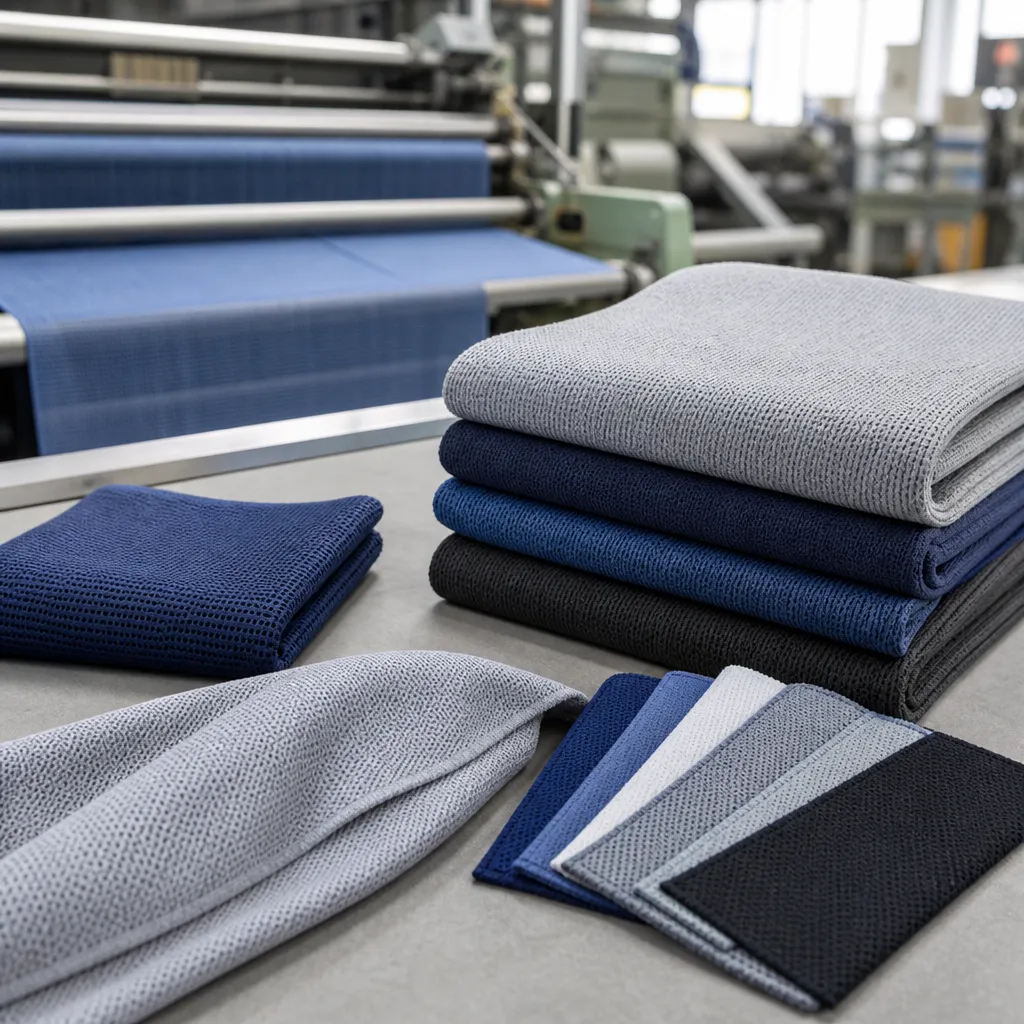
In this category, buyers often ask for "microfiber" as if it were one material. It is not. For bath towels, the practical split is between warp-knit pile constructions and woven or suede-touch styles. Warp-knit pile gives more grab on water and a fuller bath-towel silhouette. Suede-touch fabric prints sharply and packs small, but it can feel more like a sports accessory than a home textile.
| Construction | Typical GSM | Where it works | Main risk |
|---|---|---|---|
| Warp-knit coral fleece | 280-360 | Travel bath, gym, DTC quick-dry | Can feel too slick if pile is cut too short |
| Microfiber terry | 320-420 | Bath-focused retail, hospitality backup | Bulkier carton and slower line drying than lighter builds |
| Suede face + loop backing | 250-330 | Printed retail concepts | Face may feel less plush on skin |
| Flat suede | 180-240 | Sports or promotional, not true bath use | Weak body-drying experience |
A technical detail worth checking on samples: whether the pile face is sheared evenly after dyeing. Uneven shearing creates glossy bands that buyers sometimes mistake for color shading. It is actually a finishing issue. Another is edge torque after heat setting. In lightweight microfiber, poor heat-set balance can twist the panel so the towel never lies flat after washing.
Fiber ratio is not just a line item
Most bath-grade microfiber towels are polyester and polyamide blends. The common range is 80/20 or 85/15. On paper, that sounds like a small difference. In use, it changes absorbency, handfeel, and cost. Polyamide raises water uptake and softness, but it also moves the FOB higher. If a buyer asks for a very soft hand while keeping a low target price, the gap usually appears here.
For a recent development brief similar to a compact shower towel, an 80/20 terry microfiber at 340 GSM absorbed better in the first pass than an 88/12 option at 335 GSM, even though the weights were close. The reason was not only blend ratio. The yarn fineness and loop density were different, which is why we prefer to test the finished fabric rather than trust a composition label alone.
| Blend | Handfeel | Absorbency tendency | Indicative FOB at 3,000 pcs 70x140 cm |
|---|---|---|---|
| 88/12 | Smoother, slightly drier touch | Moderate | USD 2.28-2.62 |
| 85/15 | Balanced | Good | USD 2.41-2.86 |
| 80/20 | Softer, fuller | Better | USD 2.58-3.04 |
Those price bands assume plain dyed, care label, standard polybag, and one-color carton mark. Add embroidery, custom belly band, or recycled polyester claim support and the number moves. We quote MOQ from 500 pcs per design per color, but the more economical zone for bath-format microfiber is usually above 2,000 pcs because knitting and dyeing utilization improves.
Absorbency testing should be written into the approval, not discussed loosely
Vague phrases like "super absorbent" create trouble later. For this category we prefer a written test sequence. One practical route is to record fabric weight, water uptake, and dry-down against a retained approval sample. We also recommend including colorfastness and dimensional checks because microfiber problems rarely appear in isolation.
- Approve a sealed reference sample with fabric code, finished size, and GSM tolerance.
- Run absorbency comparison after one wash and after five washes using the same test setup each round.
- Check drying time in a controlled room condition and note whether the towel is line dried flat or hung.
- Record edge appearance, waviness, and handfeel drift, not just numerical pass/fail values.
Two named methods that help make these discussions concrete are AATCC 79 for absorbency of textiles and ISO 6330 for domestic washing procedures. We do not claim that one single standard tells the whole story for a bath towel, but using a repeatable wash protocol matters. If the buyer tests one sample in a cold short cycle and another at 40°C with detergent and tumble dry, the comparison is not reliable.
- Suggested wash benchmark for bath use: ISO 6330 40°C domestic wash, 5 cycles before bulk signoff.
- Suggested colorfastness check: ISO 105-C06 for washing and ISO 105-X12 for rubbing.
- Suggested dimensional tolerance after wash: within 4% length/width change for stable bath formats.
Where microfiber bath towels fail in bulk orders
The most common failure mode is not a dramatic defect. It is a towel that technically matches the sample weight and size but feels flatter and less thirsty in bulk. That usually comes from one of three places: a denser heat setting that collapses loft, a pile cut adjustment made to control lint appearance, or yarn substitution when the original denier is not reserved in time.
The second recurring problem is edge behavior. On bath-format pieces, especially 70x140 cm and above, a narrow hem paired with a lively knit can create waving after wash. We often recommend a hem width around 1.8-2.5 cm and stable overlock or folded edge construction depending on the fabric. A decorative narrow binding may look neat on a fresh sample but can tunnel after repeated laundry.
| Failure mode | What causes it | How to spec around it |
|---|---|---|
| Boardy handfeel after wash | Over-heat setting or finish imbalance | Lock reference sample after wash cycle, not greige stage |
| Weak absorbency first use | Too much smooth shearing or low polyamide | Set water uptake comparison against approval sample |
| Edge waving | Hem/fabric tension mismatch | State hem width and wash appearance standard in PO |
| Diagonal skew | Poor knitting balance or finishing tension | Approve max skew tolerance and inspect folded presentation |
If the order includes dark shades, another category-specific check is crocking onto pale bathroom surfaces or packaging inserts before full wash stabilization. It is not common on every run, but with deep navy, charcoal, or saturated black we prefer pre-bulk lab confirmation rather than assuming the dyehouse recipe from a sports towel will behave the same on a bath-weight substrate.
Size, weight, and carton math should be solved together
A microfiber bath towel sourcing playbook becomes expensive when buyers optimize only the piece cost and forget freight cube. This category compresses better than cotton, but the spread between constructions is still meaningful. A 70x140 cm towel at 300 GSM and a 75x150 cm towel at 390 GSM may sit close in perceived value online, yet they ship very differently.
For retail, we normally review the folded size before final sampling. If the brand wants a rigid gift box, thick pile may force a larger box, which raises air freight and shelf-space cost. For hospitality or institutional use, carton count and barcode handling usually matter more than the individual fold presentation.
| Spec example | Approx. piece weight | Indicative carton pack | FOB at 5,000 pcs |
|---|---|---|---|
| 70x140 cm, 300 GSM, coral fleece | 294 g | 40 pcs/ctn | USD 2.16-2.46 |
| 70x140 cm, 360 GSM, microfiber terry | 353 g | 36 pcs/ctn | USD 2.54-2.93 |
| 75x150 cm, 380 GSM, microfiber terry | 428 g | 30 pcs/ctn | USD 2.96-3.41 |
These are FOB China working ranges, not fixed offers. Packaging changes can add more than buyers expect. A printed paper wrap may add only a few cents; a custom zip pouch, insert card, and suffocation-warning compliant polybag can add enough labor and material to erase the savings from choosing a lighter fabric.
Decoration choices are narrower than on beach or promo towels
Because this article is about bath use, decoration should support handfeel rather than overpower it. Full-face sublimation works beautifully on smooth microfiber, but for body towels it often produces a cooler, flatter touch that some retail buyers dislike. Embroidery on plush microfiber is possible for small marks, though stitch pull can distort the panel if backing and location are not planned. A woven label or hem logo often gives a cleaner result.
- Hem label: lowest disturbance to handfeel; good for bath bundles and private label lines.
- Small embroidery: workable on medium-weight constructions; keep density controlled and avoid center-body placement.
- Sublimation panel effects: better for travel-oriented concepts than for plush bath positioning.
If the logo area matters, it helps to compare methods against the bath-use brief rather than the artwork alone. We covered broader method trade-offs in [embroidery-vs-sublimation-vs-jacquard.html], but on this product the deciding factor is usually skin feel after wash, not initial visual sharpness.
Lead times are driven by knitting slots and color approval, not just sewing
Buyers sometimes estimate lead time from a sewn sample and then get surprised in bulk. The sample may be cut from available fabric. Production needs fabric booking, dyeing, finishing, cutting, sewing, inspection, and packout. If the fabric is a standard white stock with simple trim, the path is shorter. If it is a custom dyed 80/20 terry microfiber with private-label packaging, the schedule stretches.
- RFQ and tech review: 2-4 days
- Lab dip or shade submission for custom color: 4-7 days
- Proto or counter sample: 7-12 days
- Bulk fabric knitting and dyeing: 18-28 days
- Cut, sew, final inspection, packout: 8-14 days
- Ex-factory to FOB booking readiness: usually 1-3 days after packout
A practical total for a normal custom order is around 32-48 days after sample approval and deposit. If the order lands before a local holiday, or if multiple dark shades need repeat lab work, add buffer. For freight planning, [container-vs-air-freight-towel-orders.html] is useful, but for bath-format microfiber the first savings opportunity is often carton optimization rather than the mode itself.
What to put on the RFQ so the quote is usable
A weak RFQ produces a wide price range because too many assumptions are left open. For this product, the buyer should specify not just size and color, but the end use, expected handfeel, blend target, construction type, edge finish, packaging, and test expectations. If you have a benchmark sample, send it. We can usually identify whether it is coral fleece, terry microfiber, or a hybrid construction within minutes, and that removes guesswork.
- Finished size and tolerance, for example 70x140 cm ±3%
- Target GSM range and whether tolerance is before or after wash
- Blend target, such as 85/15 or 80/20
- Construction note: warp-knit coral fleece, terry microfiber, or suede/loop hybrid
- Hem type, label position, and packaging format
- Required tests: absorbency, wash appearance, colorfastness, dimensional stability
- Order split by color and any MOQ constraint below standard production efficiency
If you need help structuring that sheet, [build-towel-tech-pack-that-mills-can-quote.html] gives a useful format. Buyers comparing microfiber against cotton may also want [microfiber-vs-cotton-towel-comparison.html] and [towel-gsm-decision-framework.html] before locking the brief.
The cost-per-use argument only works if the product actually fits the channel
We are careful with cost-per-use claims because they can be abused to justify any higher quote. In this category, the math only makes sense when the operational benefit is real. For a gym shower program, a towel that dries faster between turns and ships in smaller cartons may indeed lower the system cost. For a luxury hotel bath setup expecting dense cotton handfeel, forcing microfiber to chase a cotton brief often produces neither comfort nor savings.
One recent comparison on a compact shower-towel brief came out like this: an 85/15 microfiber terry piece at 70x140 cm and 350 GSM quoted in the high two-dollar range FOB, while a comparable cotton terry alternative for the same dimensions and performance target landed notably higher in freight and drying time at the client site. But on a premium guest-room brief, the cotton option still won because the tactile expectation was the product. The channel decides whether microfiber is the smart spec.
Related reads: [custom-microfiber-towels-wholesale-guide.html], [why-gym-towels-fail-after-50-washes.html], and [private-label-vs-white-label-towel-programs.html].
A short approval checklist before you release bulk
The safest signoff is boring and specific. One sealed sample, one written test sheet, one packaging standard, and one tolerance table are enough for most programs. Trouble starts when development comments live across chat screenshots, marked-up PDFs, and memory.
- Approve the final sample after wash, not only fresh off the sewing line.
- Confirm fabric construction and blend on the quote and PI.
- Write dimensional, GSM, and skew tolerances into the PO.
- Freeze packaging details before bulk cutting starts.
- Require pre-shipment photos or third-party inspection for first orders.
Related reads: [how-to-read-oeko-tex-certificate.html] for compliance review and [negotiate-towel-moq-without-killing-margin.html] if your color split is pushing below the efficient run size.
Need a quote for a microfiber bath towel program?
Send your target size, construction, blend, packaging, and color split. We can quote from our 500 pcs per design per color MOQ and flag absorbency or edge-risk issues before sampling. WhatsApp +86 13205717266 or email [email protected].
Request OEM Quote →