Hotel Towel Wholesale Supplier Subtier Vendor Oversight for United States Buyers
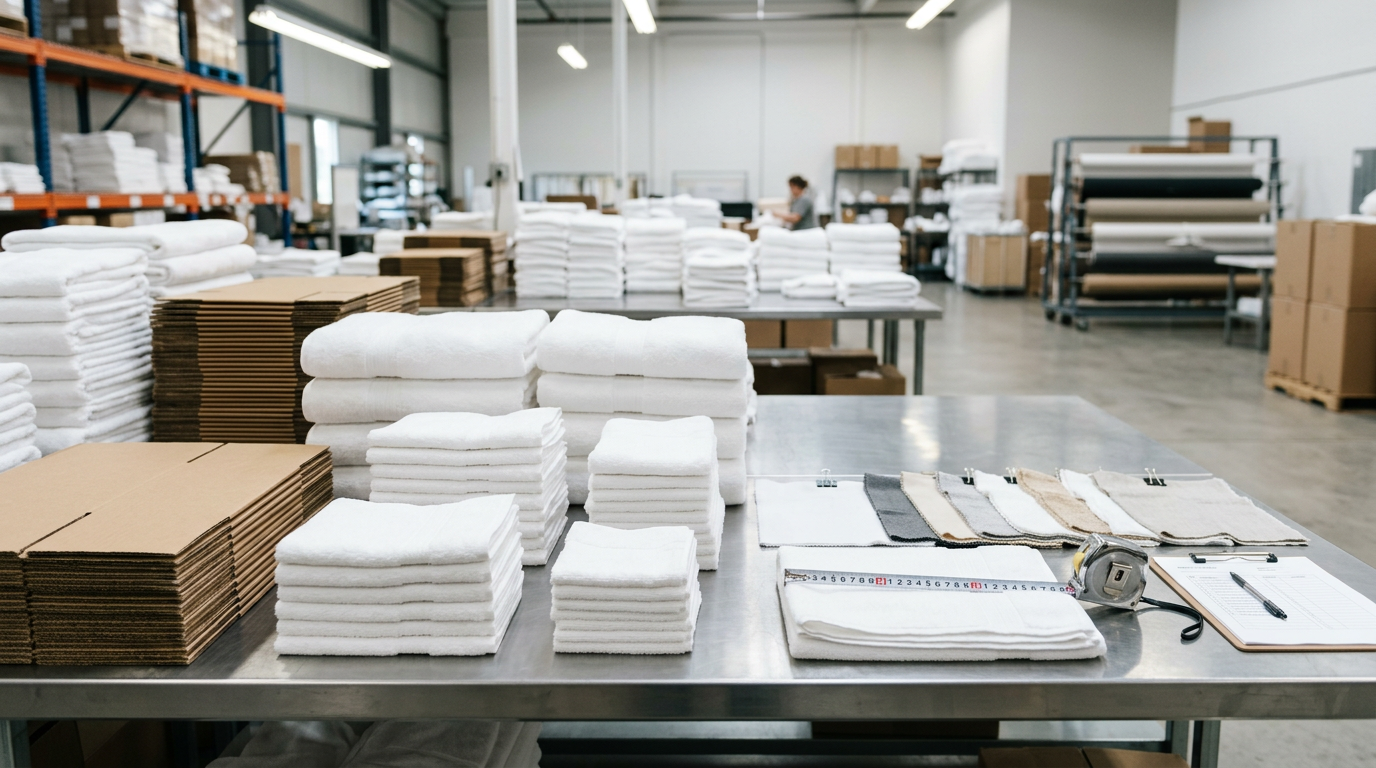
Choosing a hotel towel wholesale supplier subtier vendor oversight approach is not only about selecting the contracting supplier. For United States buyers, the purchase also depends on the vendors behind that supplier who may handle spinning, weaving, dyeing, finishing, sewing, inspection, packing, or warehousing. If those subtier roles are not named, agreed, and controlled before an order is placed, the buyer can approve one specification and receive towels produced through a different process, packed by a different party, or shipped from a different location than expected.
This article keeps the focus on one buyer task: hotel towel wholesale supply with clear subtier vendor oversight. It does not replace a contract or legal advice. Instead, it gives procurement teams a practical way to map who does what, agree specifications in writing, compare suppliers on the same controls, and build an RFQ that makes changes visible before they affect delivery or acceptance.
What Subtier Vendor Oversight Means for Hotel Towel Wholesale Supply
Subtier vendor oversight means the buyer asks the contracting supplier to identify the other parties that materially contribute to the finished hotel towel, describe the work each party performs, and agree how any change to those parties or processes will be notified and approved. Oversight is a procurement control, not an assumption that every subtier must be managed directly by the buyer. The level of detail should match the risk in the order, the consistency required across properties or locations, and the buyer's need for repeat orders to match an approved sample.
A useful starting point is to separate three questions. First, who is the contracting supplier responsible for the order, invoicing, communication, and final acceptance? Second, which subtier vendors perform steps that can change appearance, hand feel, absorbency behaviour in use, dimensions after washing, colour consistency, labelling, or packing? Third, what evidence will the supplier provide, such as written declarations, production records, inspection notes, or sample approvals, so the buyer is not relying only on verbal assurance?
Buyers should ask for this information early, before price comparison becomes the main discussion. Two quotations for hotel towel wholesale supply may look similar while relying on very different subtier arrangements. One supplier may control most steps directly or through long-agreed vendors, while another may place individual production steps order by order. Neither model is automatically acceptable or unacceptable. The procurement issue is whether the arrangement is disclosed, stable enough for the buyer's needs, and covered by clear change notification and approval rules.
Mapping the Supply Chain Before You Approve a Supplier
Begin with a simple supply chain map for the exact towel programme under discussion. Cover bath towels, hand towels, washcloths, bath mats, and any other items in the range separately if their construction or finishing differs. For each item, ask the supplier to list the party responsible for yarn supply, fabric formation, dyeing or bleaching, finishing, cutting and sewing, decorative borders or labels, final inspection, folding, packing, and dispatch. Where the same party performs several steps, record that clearly rather than leaving gaps.
Next, ask which steps are performed by the contracting supplier and which are performed by subtier vendors. Request the legal or trading name used by each material subtier, the location where the work is performed, and the process performed there. The buyer does not need to turn this into a general country guide. The purpose is narrower: to know where agreed work happens so that a later change in party or location can be recognised, assessed, and approved or rejected before production continues.
Then connect the map to the product specification. If a subtier handles dyeing, ask how colour approval is managed and which approved reference sample will be used. If a subtier handles sewing, ask how stitching, hems, and label placement will be checked against the approved sample. If a subtier handles packing, ask how carton contents, size assortment, and outer identification will be verified. Each answer should point to a named responsibility and a record the buyer can request, rather than a general promise of quality.
Finally, agree what counts as a material change. Examples to discuss include a change of subtier vendor for a listed process, a change in the place where a process is performed, a substitution of yarn or fabric construction, a change in dyeing or finishing route, and a change in inspection or packing responsibility. Ask the supplier to confirm in writing that material changes will not be made to an approved order without prior buyer notification and, where the buyer requires it, written approval and a new approval sample.
Buyer Decision Table for Hotel Towel Wholesale Supply
Use the table below to compare suppliers on process control rather than on unsupported claims. Complete each row from written supplier responses, approved samples, and documents the buyer has actually reviewed. Leave a row marked as unresolved when the supplier has not answered clearly, and resolve it before award rather than assuming it will be clarified during production.
| Decision area | What the buyer should check | Buyer action before award | Risk if left unclear |
|---|---|---|---|
| Contracting responsibility | Which supplier entity is accountable for specification, production, inspection, packing, and delivery | Require a named contracting party and a written statement of overall responsibility | Disputes over who must correct defects or delays |
| Subtier disclosure | Which vendors perform weaving, dyeing, finishing, sewing, inspection, and packing | Ask for a process-by-process subtier list tied to the quoted towel range | Approved samples may not match later production routes |
| Specification control | Agreed size, construction, colour, border, label, and packing details for each towel type | Specify every item in writing and link it to an approved reference sample | Inconsistent towels across cartons, properties, or repeat orders |
| Change notification | How and when the supplier will report a proposed subtier or process change | Require advance written notice and buyer approval for material changes | Silent substitutions that are discovered only on delivery |
| Sample approval | Which samples represent colour, construction, finish, label, and packing | Ask for approval samples that identify the producing route and retain buyer approval records | No reliable reference for acceptance or repeat ordering |
| Inspection responsibility | Who inspects, at which stage, and which defects or deviations must be reported | Specify inspection stages, reporting format, and buyer acceptance rights | Problems found after dispatch when correction is harder |
| Labeling and packing | Label content, label placement, folding, inner packing, carton assortment, and carton marking | Require artwork, wording, and packing layout approval before production | Mislabelled or mixed stock that cannot be put into service smoothly |
| Delivery and landed cost | Which cost elements are included, where delivery occurs, and who handles each delivery step | Ask for a written breakdown of included and excluded cost and delivery responsibilities | Totals that cannot be compared and unexpected charges on arrival |
| Corrective action | How nonconforming towels will be sorted, replaced, credited, or otherwise resolved | Specify the remedy process, time frames to be agreed, and communication route | Slow resolution and inconsistent handling between orders |
| Repeat order continuity | Whether the same subtier route and specification will be used for reorders | Require the supplier to confirm continuity or notify changes before each repeat order | Gradual drift in colour, feel, or construction over time |
A completed table helps the buyer make a defensible award decision. It also creates a shared record for colleagues in operations, finance, and housekeeping who will judge the towels in use. If a supplier answers some rows well and leaves others open, treat the open rows as part of the negotiation rather than as minor administration. In wholesale supply, unresolved process questions often become acceptance disputes later.
Subtier Vendor Oversight Controls for United States Hotel Towel Orders
For United States buyers, oversight should be written into the purchase process at three points: supplier selection, pre-production approval, and acceptance. At selection, compare the disclosure and change control offered by each supplier, not only the quoted towel and delivery terms. At pre-production, confirm that the subtier route declared during selection is the route that will produce the order, and that approval samples come from that route. At acceptance, check delivered towels against the approved specification, sample, labelling, and packing agreement, and record any deviation while the evidence is still available.
Keep oversight proportionate. A buyer may choose to request declarations and production updates from the contracting supplier rather than contacting subtier vendors directly. What matters is that responsibility does not become fragmented. Ask the contracting supplier to remain responsible for coordinating subtier work, reporting deviations, and obtaining approval for material changes. If direct communication with a subtier is proposed, agree who may give instructions, who may approve changes, and how those decisions will be recorded so conflicting instructions do not reach production.
Documentation discipline is central. Keep the agreed specification, subtier list, approval sample record, label and packing approval, inspection arrangement, and change approvals together under the order reference. When a change is approved, update those records and identify which orders it applies to. When a change is not approved, record that decision as well. This prevents an approved change for one towel type or one delivery from being applied silently to another.
Buyers should also decide how deviations will be handled before the first shipment. Discuss sampling on receipt, how cartons will be selected for checking, which deviations require notification, and what information the supplier must provide when a deviation is found. Agree whether affected stock will be held, sorted, returned, replaced, or accepted under a documented concession. The exact remedy should be written into the order terms rather than negotiated for the first time after a problem is discovered.
Specification, Labeling, and Documentation to Agree in Writing
A strong specification supports subtier oversight because it gives every party the same reference. For each towel type, specify dimensions, construction details, yarn or fibre description as offered by the supplier, colour, border or dobby design, hem type, label position, and any property or brand identification the buyer requires. Ask the supplier to confirm which of these details are controlled at each production stage and which subtier is responsible for each stage. Where a detail matters for acceptance, describe how it will be checked and what reference sample or artwork will govern it.
Labeling deserves separate attention. Ask the supplier to provide the proposed label wording and layout for buyer approval, including fibre content wording, care instructions, origin information, size identification, and any buyer-specific reference the buyer requires. Do not assume the contracting supplier and the sewing or packing subtier are working from the same label version. Require the supplier to confirm that the approved version is the version supplied to the party attaching labels and the party packing cartons, and ask how outdated label stock or artwork will be prevented from use.
Packing is another point where subtier handoffs can create errors. Specify folding method, pieces per inner pack where used, size assortment per carton, carton identification, and any separation required between properties, colours, or delivery addresses. Ask who performs final packing, who checks carton contents, and what packing list will accompany the shipment. A clear packing agreement reduces receiving work and makes shortages or mixing easier to identify and attribute.
Throughout this section, avoid accepting unsupported assurances in place of documents. If a supplier makes a claim about a material, process, or capability that matters to the decision, ask the supplier to provide supporting documentation or to restate the point as a specification the buyer can verify on samples and delivered goods. If documentation is not available, record the point as unverified and decide whether the order can proceed on sample approval and acceptance checking alone.
Landed Cost, Delivery, and Change Control
Compare landed cost on a like-for-like written basis. Ask each supplier to state which elements are included in the quoted price and which are excluded, covering the towels, packing, transport to the agreed destination, and any handling or delivery steps within the supplier's responsibility. Ask the supplier to identify charges that may arise separately so the buyer can compare total expected cost rather than only a headline unit price. Do not compare quotations where one includes a delivery step that another excludes.
Delivery control should name the agreed destination, the delivery window or date basis to be confirmed in the order, the party responsible for dispatch, and the documents that will accompany the goods. Ask how partial deliveries, split shipments, or changes in dispatch location will be notified. If a subtier warehouse or packing site dispatches the order, record that arrangement in advance rather than learning it from shipping documents after dispatch.
Change control links cost and delivery back to oversight. A change of subtier, production location, packing site, or dispatch arrangement can affect specification consistency, delivery timing, and total cost even when the towel description stays the same. Require the supplier to state in any change notice whether the proposed change affects specification, sample validity, packing, delivery, or price. The buyer can then approve, reject, or request a new sample and revised quotation with full knowledge of the effect.
RFQ Checklist
- Ask the supplier to provide a process-by-process list of subtier vendors for weaving, dyeing, finishing, sewing, inspection, and packing for the quoted hotel towel range.
- Require the supplier to confirm in writing which party is contractually responsible for specification compliance, inspection, packing, and delivery.
- Specify the size, construction, colour, border, hem, label, and packing requirements for each towel type and link them to an approval sample.
- Ask the supplier to submit proposed label wording, label layout, and carton marking for buyer approval before production begins.
- Require advance written notification and buyer approval before any material change of subtier vendor, production location, material, process, or packing site.
- Ask the supplier to state which landed cost elements are included and excluded, the agreed delivery destination, and who is responsible for each delivery step.
- Specify the inspection stages, reporting format, acceptance checks, and deviation notification the buyer requires for the order.
- Require the supplier to describe how nonconforming towels will be sorted, replaced, credited, or otherwise resolved under the order terms.
- Ask the supplier to confirm whether repeat orders will follow the same declared subtier route and how any change will be notified before production.
Ongoing Review After the First Order
Subtier vendor oversight does not end when the first delivery is accepted. After receipt and initial use, review whether delivered towels match the approved specification, whether labelling and packing followed the agreement, and whether any deviation was reported promptly. Feed those findings into the supplier record and into the next RFQ rather than relying on memory. A short written review after each order helps the buyer distinguish a one-off error from a pattern linked to a particular process or handoff.
Before a repeat order, ask the supplier to reconfirm the subtier list and specification version. Suppliers and their vendors can change arrangements between orders, and an earlier approval should not be treated as permanent. Reconfirmation is a brief step that protects continuity of colour, construction, and packing. If anything has changed, decide whether a new sample, revised inspection arrangement, or updated quotation is needed before committing.
Used consistently, this approach makes hotel towel wholesale supply more predictable without pretending that a buyer can control every factory-floor decision. The buyer controls what procurement can control: clear disclosure, written specification, sample approval, change notification, comparable landed cost, defined acceptance, and a documented remedy. Those controls, applied to the contracting supplier and made visible across subtier vendors, are the practical foundation of subtier vendor oversight.
Discuss Your Requirements
Review our manufacturing capabilities, then share your specifications for a supplier-fit review.