Hotel Towel Wholesale Supplier Business Continuity Planning for United Arab Emirates Buyers
Vincent Xi — Editorial Author — https://www.lumacotextile.com/authors/vincent-xi/
Award hotel towel wholesale supply for a United Arab Emirates programme only after business continuity planning is a written, sampled, and priced RFQ annex. The commercial test is simple: the supplier either documents two production routes that can make the same bath, hand, and face construction, a quality window both routes must meet, buffer or rapid call-off inventory, a maximum switch-over window in calendar days, lot traceability, and a priced freight alternative—or the bid remains a single-point-of-failure linen contract.
United Arab Emirates hotel groups buying hotel towels at wholesale volume should attach that annex to the RFQ and the purchase agreement before award. One mill, one yarn lot, or one sailing can turn a dyeing delay, finishing bottleneck, carton shortage, or missed vessel into empty racks once laundry cannot replace what did not arrive. Price that path as a property-specific par and laundry-cycle risk, not as a published average, and do not trade the controls for the lowest unit price.
Public hospitality linen pages describe backup kits, seasonal restock, and replenishment support when occupancy spikes, laundry is delayed, or textiles are damaged. Backup linen and contingency planning Hotel towel buying guidance likewise tells buyers to hold consistent GSM and size, run production samples through the property laundry, confirm repeat-order lead times, and keep at least two approved suppliers rather than one source. Hotel towel buying guidance on dual suppliers and samples Supply-chain resilience writing asks buyers to map single-source linen risk and to know how quickly a backup can step in. Resilient hotel supply chains for linens
This page is an editorial RFQ aid for United Arab Emirates B2B teams specifying hotel towel wholesale supply. Practice notes are limited to the public hospitality and hotel supply-chain pages cited in this article. Mill tests, factory visits, named hotel programmes, and certifications are not asserted here; those items belong on a dated supplier offer with current documents.
How the data was derived. Buyer-facing continuity practices—backup kits, dual suppliers, single-source linen risk, and backup response speed—are taken from the three hospitality textile and hotel supply-chain pages linked above. Those pages are editorial practice sources, not mill test reports and not United Arab Emirates customs rulings. Exact commercial numbers below are example calculations or RFQ assumptions to verify in the supplier quote; the quote date, SKU list, units, and Incoterm then become the record.
Limitations / what to verify. The cited pages are general guidance. Confirm Incoterms, origin documents, packing lists, HS classification as used on the offer, and any labeling or import steps applicable to the United Arab Emirates delivery point with the buyer’s broker and the supplier. GSM, sizes, par, buffer percentages, and switch-over days are property-specific. Do not treat example days, percentages, or piece counts as standards. Distinguish any named standard’s requirement from a supplier’s own practice. Never treat an undated claim as certification. If a continuity control cannot be evidenced before award, score it as open risk.
Specifying business continuity planning in a hotel towel wholesale supply RFQ
Business continuity planning for hotel towels is a set of written, testable controls: which routes can produce the same construction, how shade and GSM are held, where finished goods or greige can sit, how a trigger (mill outage, failed lot, missed sailing) is communicated, and how many calendar days until the first backup shipment of guest-ready pieces. Ask for a continuity annex, not a slogan. The annex should name production sites—or at least the number of independent sites and the finishing route—the quality specification both routes must meet, inventory locations, notice contacts, and an allocation protocol.
A documented dual path usually costs more in sampling, shade approval, and sometimes a unit-price premium. The offset is a lower chance that guest rooms run out of bath towels after one delayed container or one failed dye lot. Compare sampling and retainer cost against the property’s own cost of room-not-ready, extra laundry overtime, or emergency local purchase; do not treat any ratio as a published benchmark. A claim that other factories exist is not enough without addresses or codes that can be audited, current production samples from each route, and a stated maximum days-to-switch.
Request lot traceability so a quality failure can be isolated. Continuity without traceability simply spreads a bad yarn or finish across more rooms. Name the construction in the RFQ: fibre (for example 100% cotton or a stated blend), yarn type, GSM target, size, hem type, and any logo or dobby if used. Then require both primary and backup routes to meet the same construction within an agreed tolerance.
If the offer has only one sampled route, no numeric quality window, no notice protocol, or no priced freight alternative, leave those rows as not offered. A continuity paragraph without samples, dates, and units is not an annex.
Dual sourcing and secondary mill approval for consistent hotel towels
Maintain at least two approved sources for the same hotel towel SKU family—bath, hand, and face—so a quality shift or delay at one mill does not stop replenishment. That dual-supplier practice is a core recommendation in hotel towel buying guidance. Hotel towel buying guidance on dual suppliers and samples Dual sourcing is not two different constructions. If the backup towel is a different GSM, pile height, or hem, housekeepers and guests will notice, and laundry formulas may need rework.
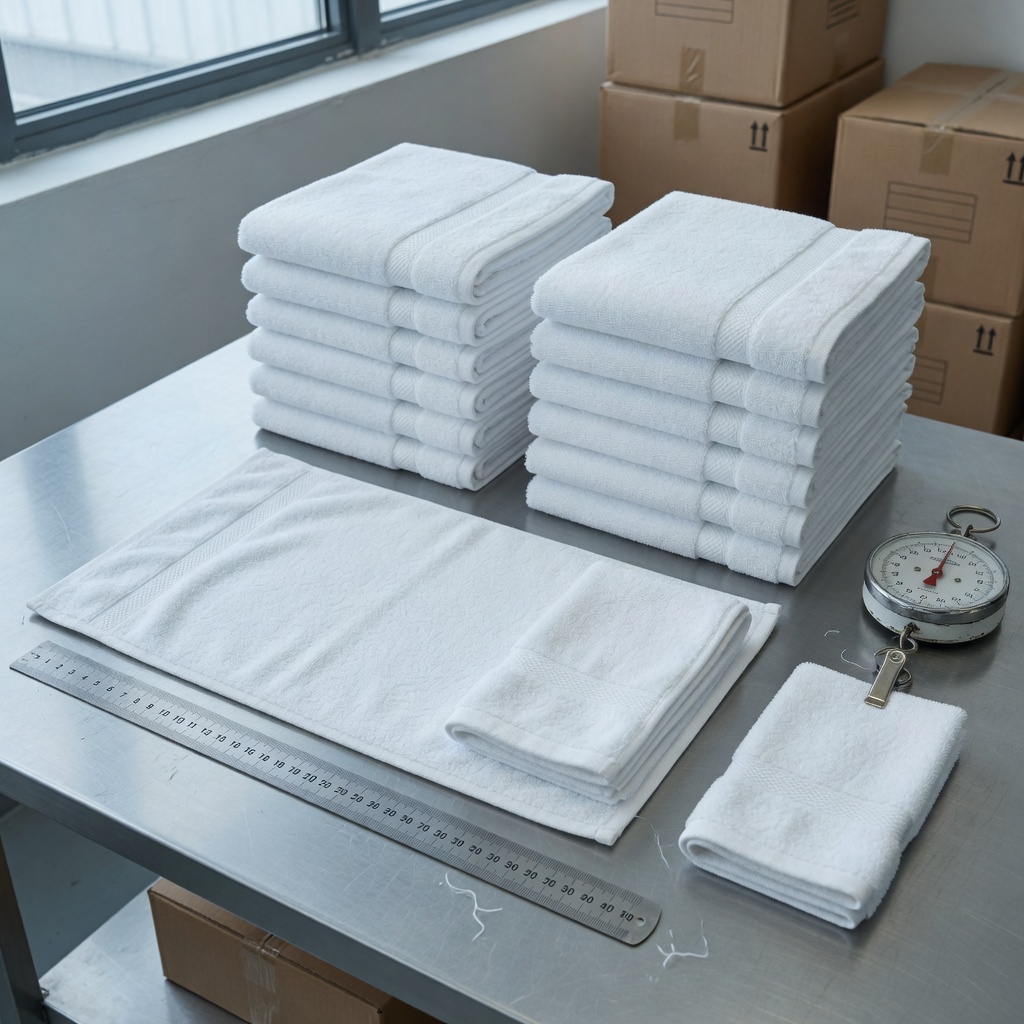
Specify a shared quality window. Example construction assumption to verify in the supplier quote (not a universal standard; confirm units and tolerances on the dated offer): bath towel 70 cm × 140 cm at a contracted 600 GSM, with incoming GSM within ±5% of the contracted value, length and width within an agreed millimetre tolerance, and shade within an agreed delta-E or visual master. Scope: the named bath-towel SKU on that offer. Units: centimetres, GSM, percent, millimetres. As-of context: the quote date and the incoming-inspection clause. Source: example RFQ assumption, not a mill certificate. Require mill test reports and retain physical masters from both sources. Run both through the property laundry, or a contracted laundry that matches the chemistry, temperature, and dryer settings, before approval. Shrinkage, pilling, and colour change after a stated number of cycles matter more for continuity than first-piece hand-feel.
Two approved mills mean two sample sets, two lab dips or strike-offs if colour is specified, and ongoing incoming inspection. The benefit is that a split or switch order can be placed without rewriting the guest-room specification. If the supplier offers only one mill, treat that as single-source risk and either dual-source with a second vendor or require a named, already-sampled backup site inside the same contract.
Showroom remnants, one-route samples, or undated shade cards do not approve a backup mill. Reject a second construction that fails the same laundry protocol even if the unit price is lower.
Buffer inventory, par levels, and emergency replenishment
Par is a property operations number (rooms × pieces per room × laundry cycle factor). Wholesale continuity is the extra finished goods that cover a missed sailing, a rejected lot, or an occupancy spike. Linen suppliers describe emergency kits, seasonal restock, and replenishment support for exactly those events. Backup linen and contingency planning
Example calculation to verify against occupancy, laundry turns, and storage—not a recommended par for any hotel: a 250-room property using 3 bath towels per room and a 2.0 par factor holds 250 × 3 × 2.0 = 1,500 bath towels in circulation. A 25% wholesale continuity lot would be 0.25 × 1,500 = 375 extra bath towels. If the dated offer lists a piece weight of 600 g for that SKU, 375 × 0.600 kg = 225 kg before cartons and pallets. Scope: one extra bath-towel continuity lot only, using the room count, pieces-per-room, par factor, and buffer percentage stated in this paragraph. Units: rooms, pieces per room, par factor, percent, pieces, grams per piece, kilograms. As-of context: use actual piece weight, carton tare, cubic metres, and the quote date on the supplier offer. Source: example calculation to verify in the quote, not a warehouse audit. Decide who holds the buffer (buyer warehouse, supplier regional stock, or a location serving the United Arab Emirates delivery point on the offer) and who pays carrying cost, insurance, and ageing risk.
Buffer ties working capital and warehouse space; too little buffer forces air freight or guest-impacting shortages. Ask the supplier to state whether ready-to-ship hotel towels are held against the SKU, the minimum replenishment quantity, the call-off process, and the hours or days from call-off to dispatch. If stock is not held, the continuity plan rests on production slots and freight options, which is weaker for short disruptions.
An uncounted stock-holding sentence is not buffer. Require SKU-level piece counts, location, rotation rule, and who owns ageing. If those items are missing, size the buffer from laundry and occupancy data or keep the row as open risk.
Alternative production sites, raw-material paths, and logistics contingencies
A mill name is not a continuity plan. Ask whether greige, dyeing, and finishing can move independently, whether cotton or yarn can be dual-sourced without changing the hand, and whether packing (polybags, cartons, pallet specs) is duplicated. Hotel supply-chain guidance tells buyers to identify single-source dependencies for linens and to analyse how fast a replacement can deliver after a failure. Resilient hotel supply chains for linens
Example RFQ window to verify, not a benchmark or standard: state a maximum of 21 calendar days from a documented trigger (mill stop, failed inspection, missed vessel) to the first backup shipment of the contracted hotel towel SKUs, and require the supplier to show that a production slot exists rather than a hope. Scope: the SKUs named on the RFQ after a written trigger. Unit: calendar days. As-of context: the protocol date and any slot evidence date on the offer. Source: example assumption to verify in the supplier quote. Separate sea and air options: sea for planned replenishment, a priced air-freight contingency for a defined emergency quantity (for example one week of bath-towel demand, with piece count stated on the RFQ). Confirm Incoterms, who books freight, quote validity date, and who owns delay risk.
A second finishing route or a second yarn origin can introduce small shade or GSM drift if not controlled. That is why the shared specification and laundry test sit in the same RFQ as the backup site. Do not accept an alternative site that has never produced the contracted construction. A paper mill list without samples is not continuity.
Reject vague “as soon as possible” switch-over language, unnamed sites, and air freight that is mentioned but not priced for a defined kilogram or piece quantity under a named Incoterm.
United Arab Emirates buyer verification: documentation, samples, and landed-cost checks
Keep the product decision primary: the same hotel towel construction, the same guest standard, and a continuity annex that can be audited. For United Arab Emirates delivery, verify only what the supplier and the buyer’s broker can document: commercial invoice, packing list, origin statement as required for the shipment, HS classification as used on the quote, and the stated Incoterm to the named place (port, airport, or inland point the supplier actually quotes). Do not assume a free-zone or mainland rule set that the supplier has not written into the offer.
Landed-cost continuity matters as much as mill continuity. A cheap ex-works towel that can only move on one scheduled sailing is not resilient. Ask for a primary ocean quote and an emergency air quote for a defined quantity, with piece weight, carton count, and cubic data so freight can be checked. Example assumption to verify in the quote: if the 225 kg continuity lot calculated above is air-freighted, the buyer should see the actual chargeable weight and the all-in emergency unit cost versus the sea replenishment unit cost. Scope: that continuity lot on the dated freight quote. Units: kilograms and currency per piece or per kilogram as quoted. As-of context: freight quote validity date. Source: example calculation to verify in the supplier quote, not a carrier tariff. Use that delta to size buffer inventory rather than guessing.
Inspection-ready samples should arrive as production pieces, not showroom pieces: same GSM, same hem, same packing. Measure size, weigh pieces, and launder before either mill is approved. If branding or embroidery is required, confirm that the backup route can apply it without an art-delay window that breaks the stated switch-over days (treat any week-count the supplier names as a planning figure on the offer, not a standard). None of the above is a claim that any named mill is certified; require current documents if a specific standard is needed, and distinguish the standard’s text from the supplier’s own practice.
Buyer decision table: continuity controls for hotel towel wholesale supply
| Continuity control | What to specify in the RFQ | Measurable trade-off | How to verify before award | Buyer action |
|---|---|---|---|---|
| Dual approved production routes | Two sites (or two independent finishing routes) able to make the same bath/hand/face construction | Extra sampling and possible unit-price premium versus lower stockout risk | Addresses or mill codes, production samples from each, capacity letter with date | Approve both or keep a second vendor; reject unnamed sites |
| Shared GSM, size, and shade window | Contracted GSM and size with numeric tolerance; master shade | Tighter tolerance raises cost and reject risk; looser tolerance risks guest inconsistency | Mill reports, incoming weigh/measure, laundry test of both sources | Write tolerances into the PO |
| Buffer or call-off stock | Who holds how many pieces, SKU list, ageing and rotation rule | Working capital and storage versus emergency freight | Stock confirmation, carton specs, photos or inspection | Size buffer from laundry and occupancy data |
| Stated switch-over time | Maximum calendar days from trigger to first backup shipment | Faster slot may cost more or require a retainer | Written protocol plus current slot evidence | Reject vague “as soon as possible” language |
| Dual logistics path | Primary ocean (or land) plus priced air contingency for a defined kg or piece quantity | Higher emergency unit cost versus avoided guest failure | Weight, carton, Incoterm, two freight quotes, quote validity date | Use the cost delta to justify buffer |
| Disruption notice | Named contacts, hours, and trigger list (failed lot, mill stop, missed vessel) | Admin load versus faster isolation of a bad lot | Written protocol in the annex | Do not award on informal phone promises |
| Lot traceability | Lot/batch on cartons and invoices; retain samples | Admin cost versus targeted recall instead of full pull | Sample carton marks and document set | Require on every wholesale shipment |
| Repeat-order lead time | Production + transit for a stated replenishment quantity | Longer lead time forces more inventory | Written lead time with validity date | Compare to the par and occupancy plan |
| Quality hold and replacement | Failed-lot replacement from the backup route under the same spec | Possible short-term allocation pain versus mixed-quality rooms | Clause plus sample from backup | Do not accept “best efforts” only |
Every row is a specify–compare–verify–approve–order step. If an offer cannot fill a row, treat that control as open risk and do not award on unit price alone.
Practical RFQ checklist for hotel towel wholesale supplier business continuity planning
Use this list as the continuity annex. Each item is something a United Arab Emirates buyer can put in writing, score, and attach to the purchase order.
- Name the hotel towel SKUs (bath, hand, face), fibre, GSM target, sizes in cm, hem construction, and colour/master reference.
- Require production samples from the primary route and from each backup route; state that showroom remnants are not accepted.
- State GSM, length, width, and shade tolerances as numbers to be confirmed on incoming inspection.
- Require both routes to pass the same laundry protocol used at the property or its contractor; define cycle count for the test.
- List dual production or finishing sites and whether yarn/cotton origin can change without a new approval.
- Ask for a written trigger list (failed inspection, mill stop, missed vessel, force majeure) and the named contacts and hours for notice.
- Specify maximum calendar days from trigger to first backup shipment of each SKU; require evidence of a slot, not a promise.
- State who holds buffer inventory, how many pieces per SKU, where it sits, ageing/rotation, insurance, and the call-off process including minimum quantity.
- Request piece-weight, carton, pallet, and cubic-metre data so sea and air landed costs can be calculated for a continuity lot.
- Obtain a primary freight quote and an emergency air quote under named Incoterms to the United Arab Emirates delivery point used on the offer, with quote validity date and chargeable weight.
- Require lot numbers on cartons and commercial documents and a retain-sample rule for each wholesale lot.
- Include a replacement clause: rejected lots are replaced from the approved backup route to the same specification, with a stated start date and who pays freight on replacement.
- Confirm repeat-order lead time for a defined replenishment quantity and the validity period of that lead time.
- Ask whether seasonal or occupancy-driven restock can be pre-agreed (quantities and windows), separate from emergency call-off.
- State who pays dual-route sampling, lab dips, and laundry tests, and whether backup capacity is reserved or shared.
- Attach the decision table scores; do not award on unit price if dual-route samples, switch-over days, notice protocol, or buffer terms are missing.
Score each item as met, partial, or not offered. Partial answers (unnamed mills, undated capacity, samples from only one route) are not continuity. After award, keep the annex live: re-sample if a mill or yarn origin changes, and reconfirm lead times and freight before peak occupancy at the United Arab Emirates property.
Business continuity planning for hotel towel wholesale supply is a documentation and testing exercise. Specify dual routes, measurable quality windows, buffer or call-off stock, notice rules, and freight alternatives, then compare offers on risk as well as price.
Discuss Your Requirements
Review our manufacturing capabilities, then share your specifications for a supplier-fit review.